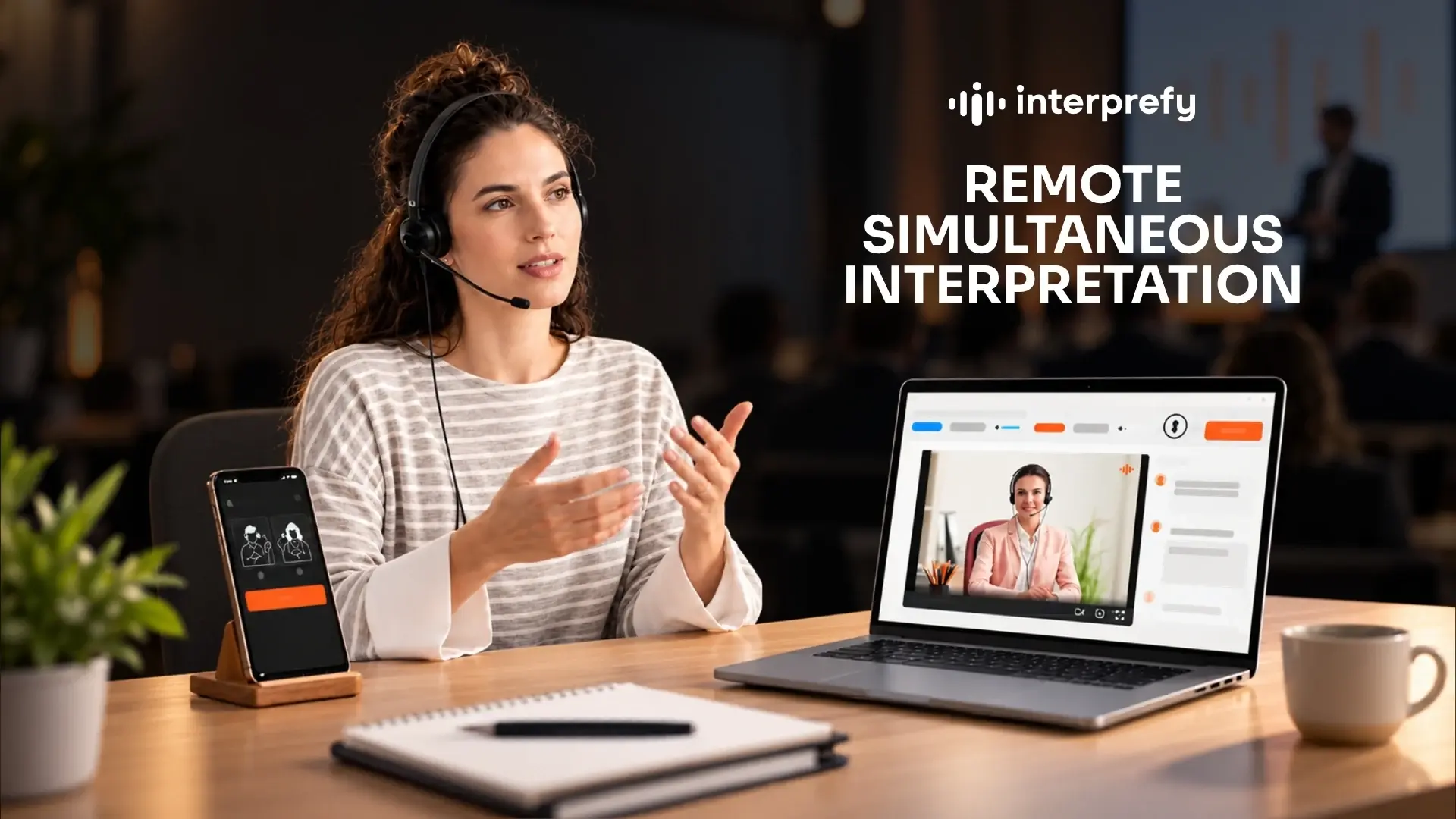
Remote simultaneous interpretation (RSI) is the process of remotely interpreting speech from one language to another in real time. Using cloud-based technology, RSI connects interpreters, speakers, and participants from anywhere in the world. It reduces costs, increases flexibility, and makes multilingual communication accessible for events and meetings of any size - from small business meetings to large international conferences.
18 min read
The Ultimate Guide to Remote Simultaneous Interpretation
Topics: Remote Simultaneous Interpretation Interpreters & Professional Services
11 min read
Sign Language Interpreting Services: Planning Notes for Event Teams
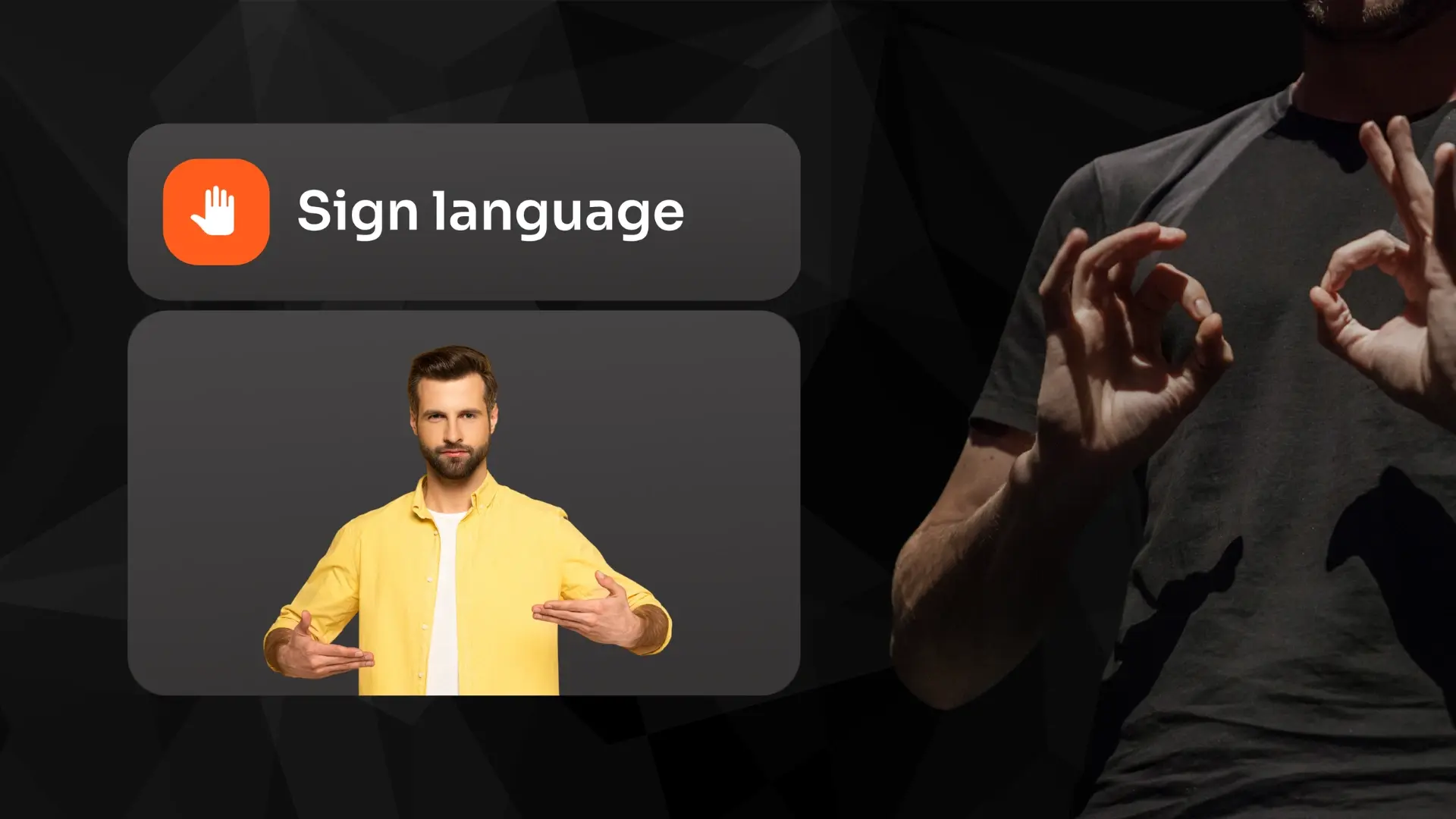
There is a version of this that happens at a lot of otherwise competent conferences. The sign language interpreter is booked, they turn up, they are excellent, and they spend the day standing three metres stage left in a dim patch of the lighting rig, at an angle where a third of the room cannot see them clearly and the camera mix never cuts to them once.
Topics: Accessibility & Compliance Interpreters & Professional Services
7 min read
Mandarin Interpreting Services: A Practical Guide for Event Teams

How Mandarin interpreting actually works at conferences, webinars and hybrid events: booth pairs, relay, terminology prep, and when AI translation does the job instead.
Topics: Accessibility & Compliance Interpreters & Professional Services
12 min read
How to Access Captions and Transcripts After Your Multilingual Event
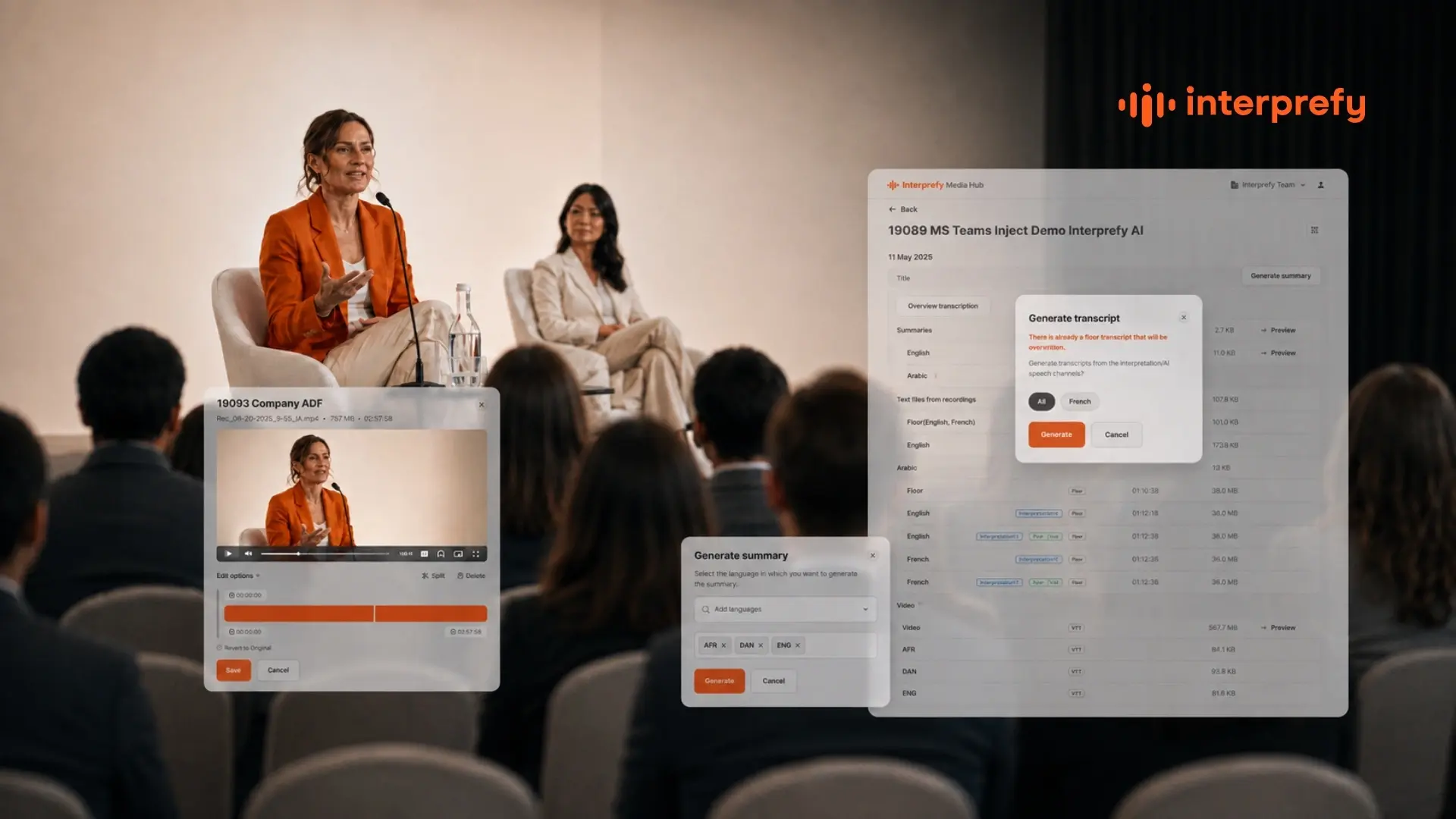
Every multilingual event generates far more than a memory of the day. Recordings, captions and transcripts pile up in the background while the event itself takes centre stage, and once the closing remarks are done, that content often just sits there. Someone eventually asks for the French transcript from the breakout session, or the English captions from the keynote, and the search begins.
Topics: Live Captions AI & Live Machine Translation Interpreters & Professional Services
7 min read
Why Remote Interpretation Services Unlock Better Thinking
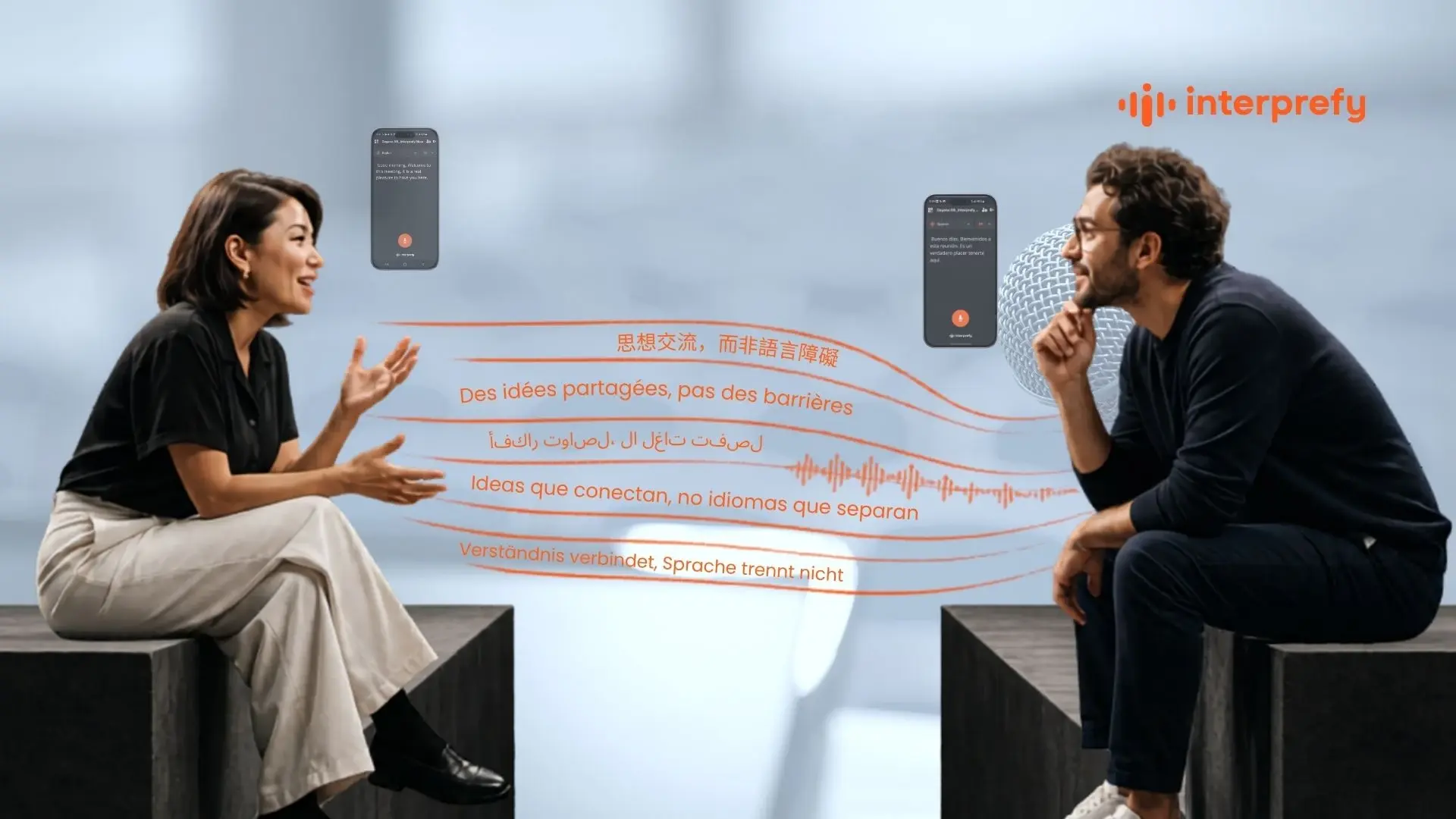
Global events are designed to bring the best ideas into one room. But when that room operates in one language only, many attendees are not participating at full capacity.
They may understand the presentation. They may follow the discussion. They may even speak the event language well. But understanding is not the same as thinking freely, responding confidently, or contributing with nuance.
Topics: AI & Live Machine Translation Interpreters & Professional Services
10 min read
How to Choose a Language Interpretation Partner: 7 Questions to Ask

If you are choosing a language interpretation provider, the challenge is rarely limited to one event. You may be sourcing support for a leadership meeting today, a webinar next month, and a global event after that, each with different requirements, stakeholders, and risks.
Topics: How-To Guides Multilingual Communication & Inclusion Interpreters & Professional Services
11 min read
The Interprefy Experience: What to Expect From a Multilingual Partner
When you reach the point of evaluating multilingual solutions, you are no longer asking whether language access matters. You already know it does. You might have seen how easily meaning gets lost across regions, how hybrid formats complicate delivery or how your teams struggle to manage language access inside and outside your organisation.
Topics: Multilingual Communication & Inclusion Interpreters & Professional Services
9 min read
How to Make Multilingual Meetings Feel Effortless

Multilingual meetings should feel natural. People should be able to focus on the conversation, not on whether they will understand it. Yet for many organisations, the moment different languages enter the room, everything suddenly feels heavier. More planning. More tools. More pressure. And more chances for things to go wrong.
Topics: How-To Guides Multilingual Communication & Inclusion Interpreters & Professional Services
6 min read
5 Use Cases for Multilingual Tech Beyond Conferences
.webp)
Organisations from all over the world are starting to rethink how they communicate internally and externally. Multilingual technology is emerging as a strategic capability, not simply a tool for major conferences. Interprefy’s latest market research across APAC and the Middle East shows that demand for real-time multilingual support continues to rise, with 86% of Middle Eastern organisers and 71% of APAC organisers identifying strong attendee expectations for live translation and interpretation at events of every type and format.

 Download from the App Store
 Download from Google Play
 More download links