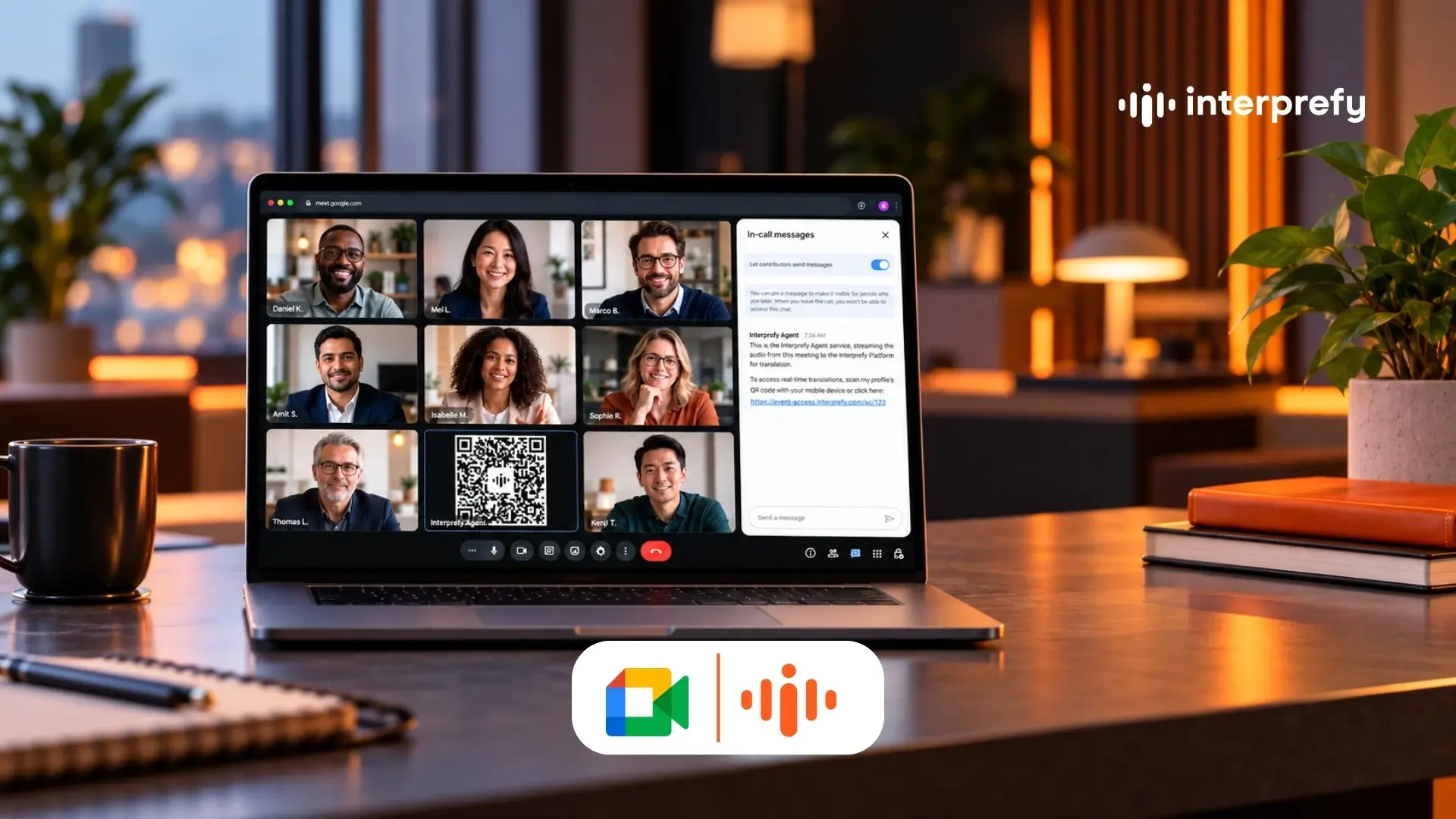
Picture a quarterly operations review on Google Meet. The regional leads join from Munich, Lahore, São Paulo and Osaka, and the host switches on Meet's speech translation expecting everyone to follow along in their own language. Within a minute it becomes clear that the feature can run only one language pair at a time, and that pair has to include English. The German speaker could be covered and so could the Portuguese speaker, but not both at once, while nobody on the call can hear the meeting in Urdu or Japanese at all.
8 min read
Google Meet Speech Translation Beyond English with Interprefy Agent
Topics: Live Captions AI & Live Machine Translation Microsoft Teams & Platform Integrations
8 min read
Zoom AI Translation vs. Interprefy Agent: The Real Difference
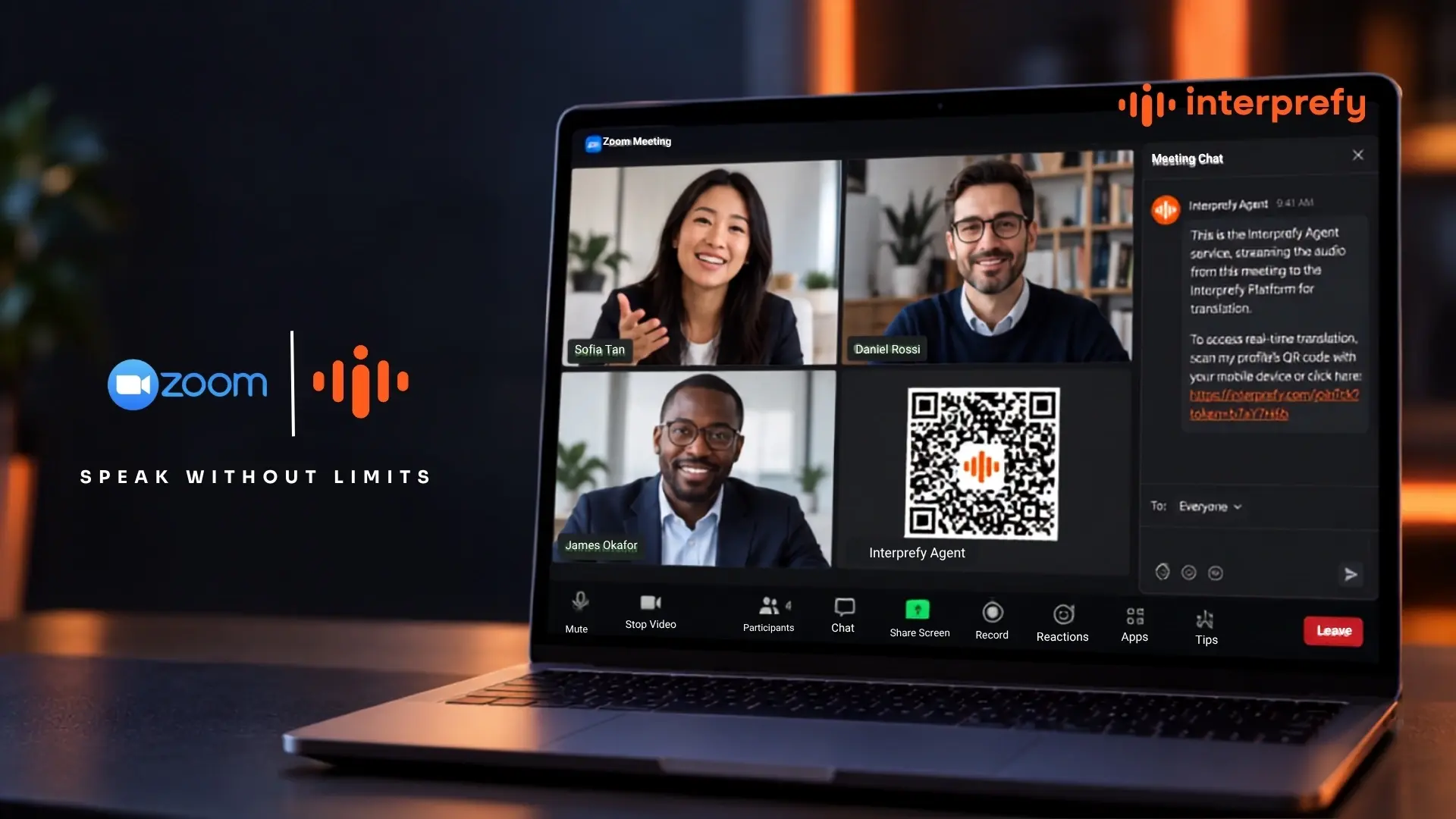
Zoom quietly changed the conversation around multilingual meetings this year. It launched Voice Translator in beta, its first attempt at converting a speaker's voice into another language automatically, without a human interpreter in the loop. For organisations that have spent years relying on dedicated interpretation platforms such as Interprefy Agent to run global meetings, the obvious question is whether Zoom's own feature now replaces what they already have in place.
Topics: Live Captions AI & Live Machine Translation Microsoft Teams & Platform Integrations
12 min read
How to Access Captions and Transcripts After Your Multilingual Event
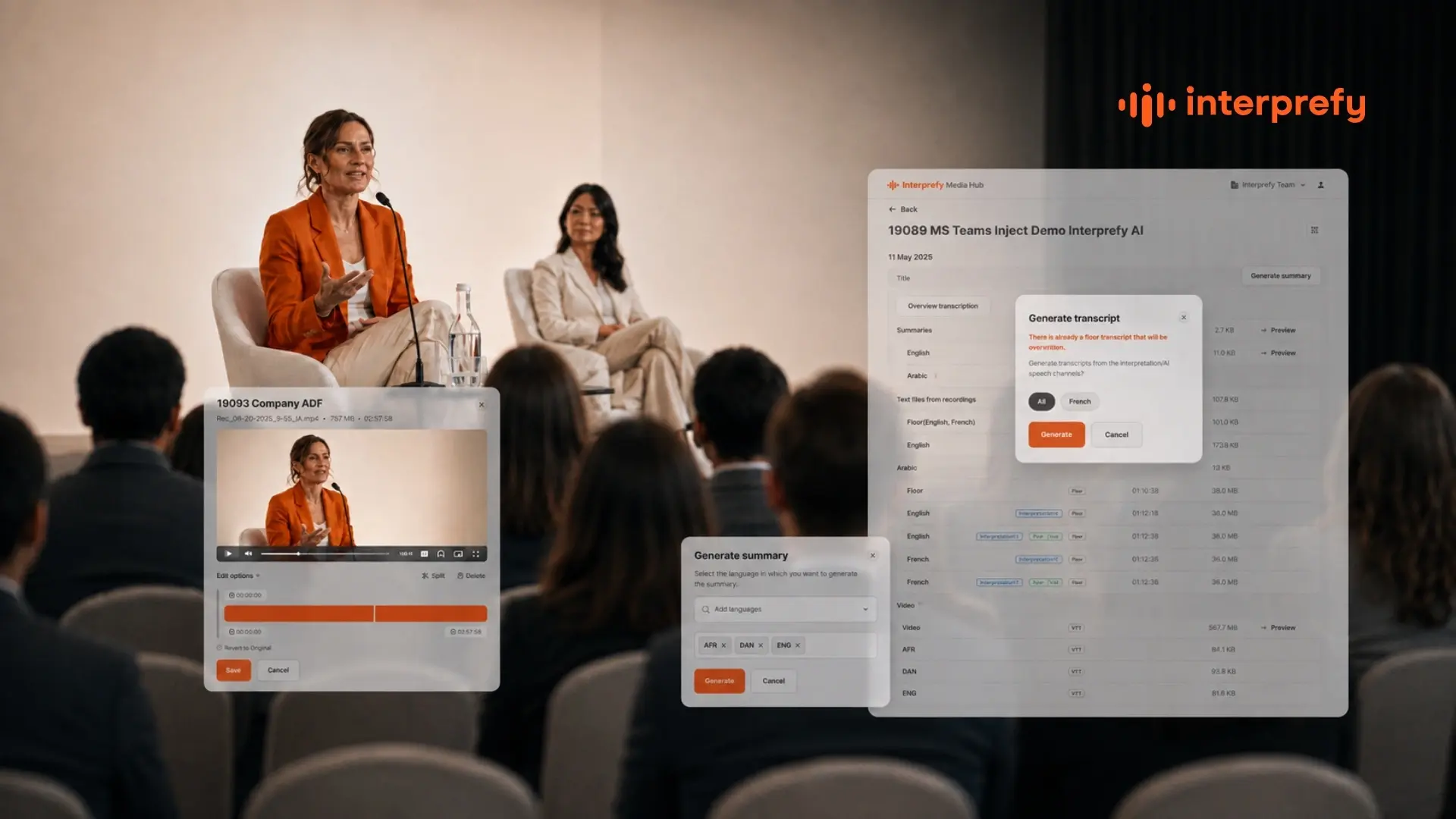
Every multilingual event generates far more than a memory of the day. Recordings, captions and transcripts pile up in the background while the event itself takes centre stage, and once the closing remarks are done, that content often just sits there. Someone eventually asks for the French transcript from the breakout session, or the English captions from the keynote, and the search begins.
Topics: Live Captions AI & Live Machine Translation Interpreters & Professional Services
11 min read
Interprefy Agent for Microsoft Teams: How It Works and Why It Helps
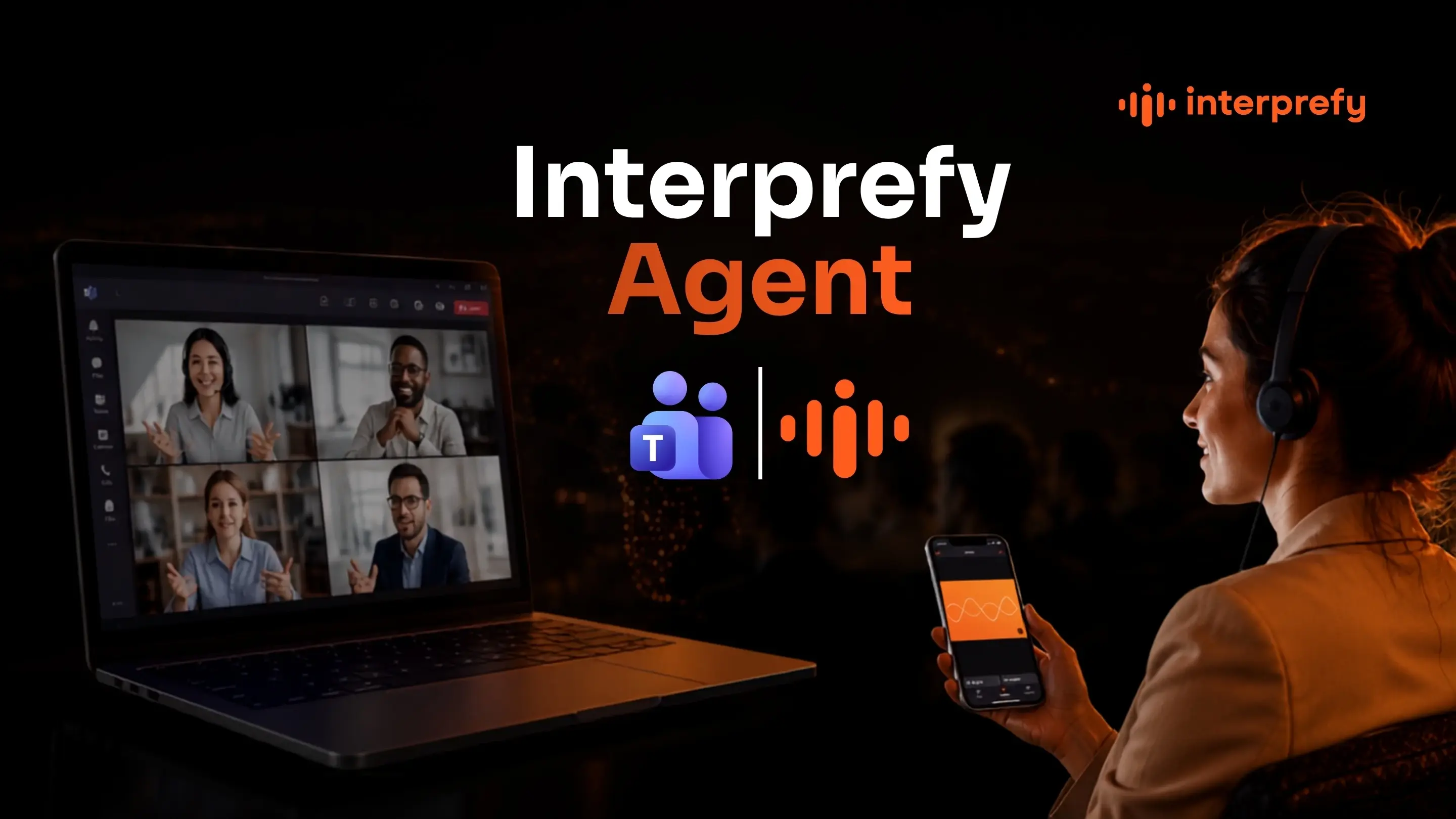
Microsoft has spent 2026 adding real interpretation muscle to Teams: automatic language detection, a consecutive mode for negotiations, support for dedicated room hardware. For an organisation working mainly in English and Spanish on a Copilot licence, that might cover most meetings on its own. For most global organisations it does not, and the gap between what Teams now offers natively and what a multilingual workforce actually needs is exactly where an interpretation platform earns its place.
Topics: Live Captions AI & Live Machine Translation Microsoft Teams & Platform Integrations
4 min read
On-Screen Captions for Onsite Events Explained
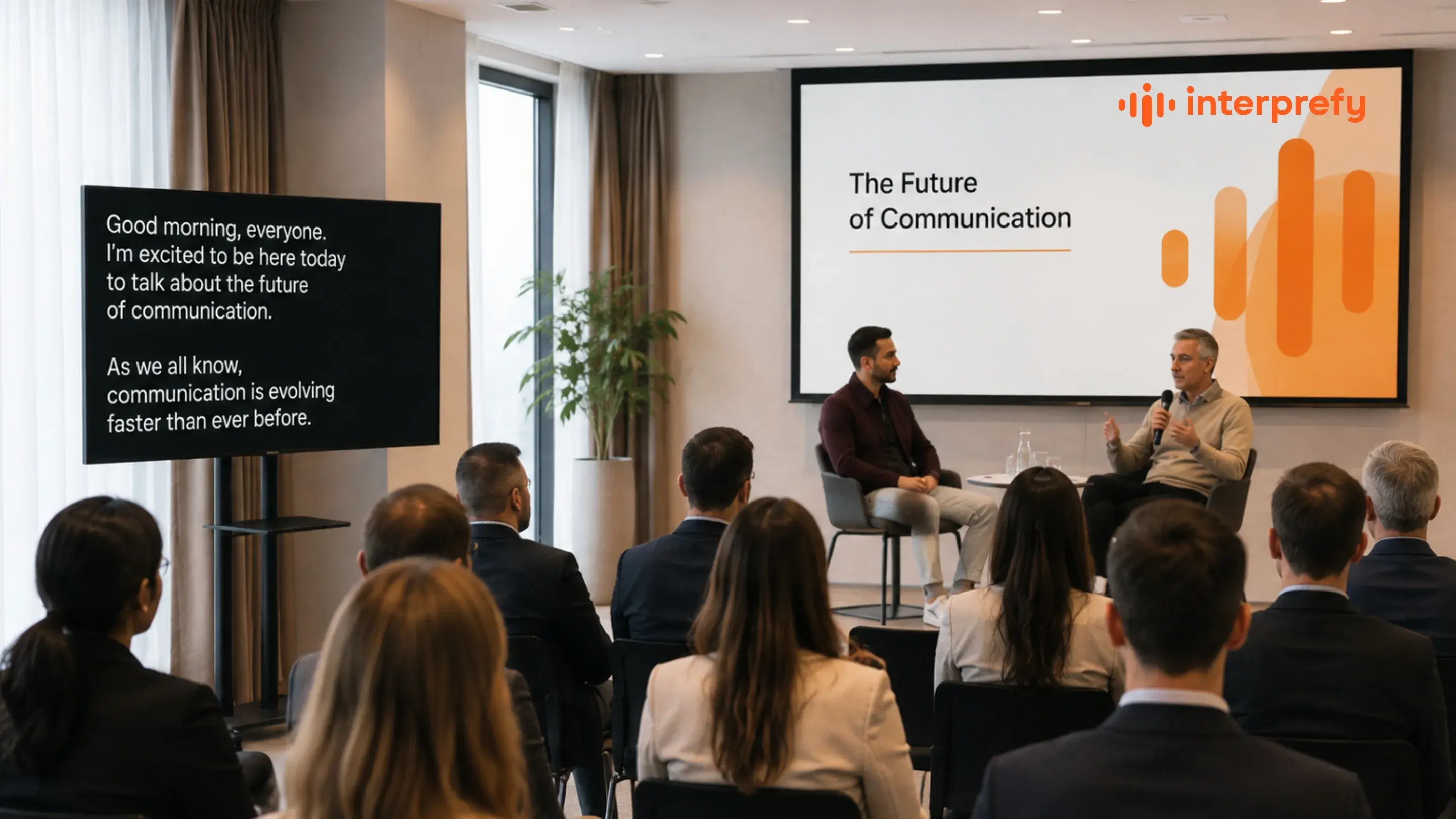
Walk into a large conference hall or auditorium today and you will often see a screen at the front of the room carrying more than slides. Underneath the speaker's name, or along the bottom third of the display, a live transcript of what is being said scrolls in real time. This is on-screen captioning, and it has moved from a niche accessibility feature to a standard expectation at well-run onsite events.
Topics: Live Captions AI & Live Machine Translation
12 min read
Real Time Captioning Services for Global Events: A Guide for Enterprise Event Teams
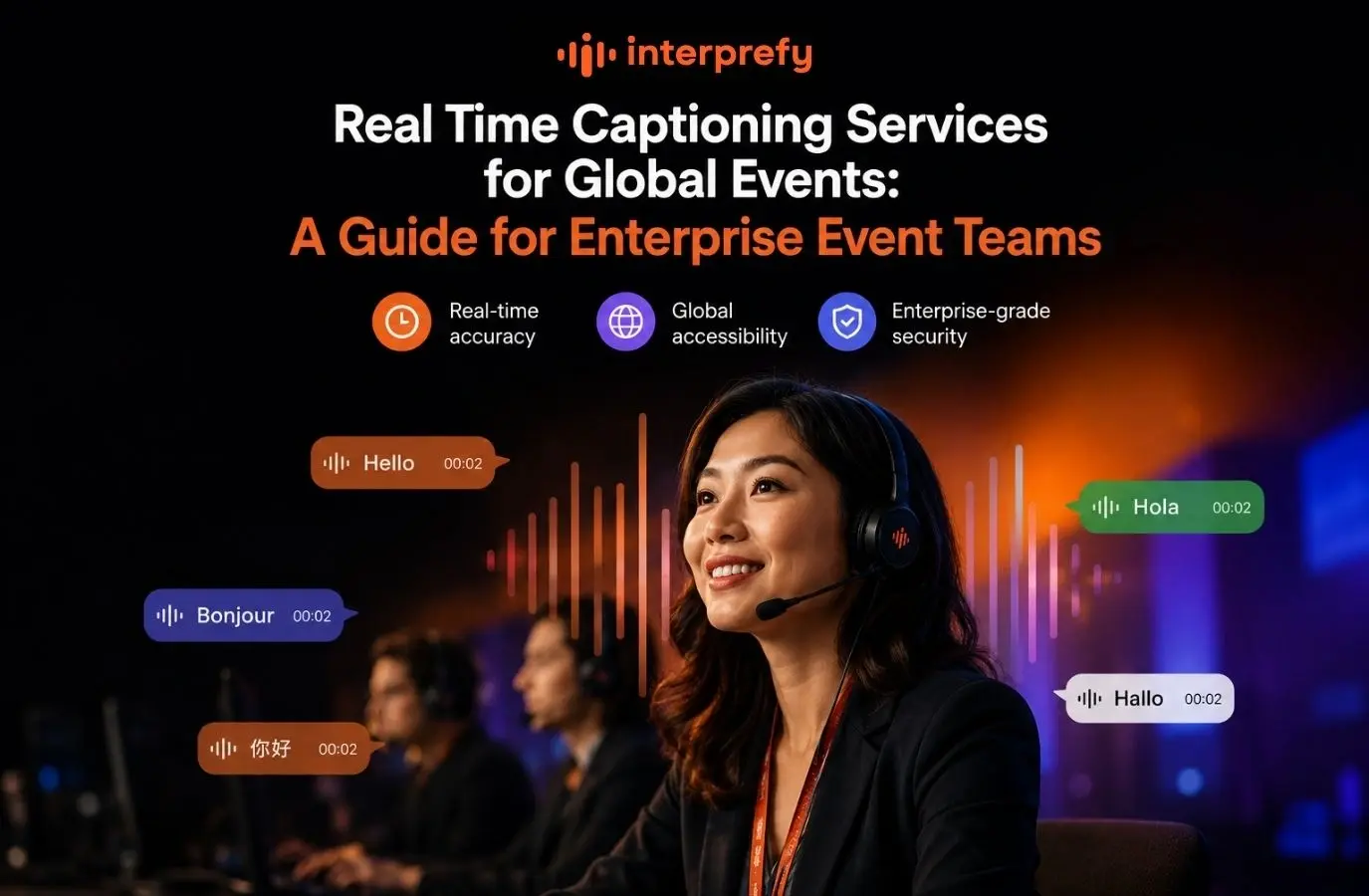
Imagine you’re at a multilingual event where interpretation was available and everything seemed inclusive, but you still missed a sentence and could not go back or follow everything was said. Sounds familiar? Perhaps the speaker moved too quickly, the audio dipped for a moment, or you were taking notes when an important point was made. At live events, even strong interpretation and good production do not always prevent information from being missed.
Topics: Live Captions Event Planning and Hybrid Events
6 min read
CART, Live Captions And Subtitles: How To Plan Real-Time Access
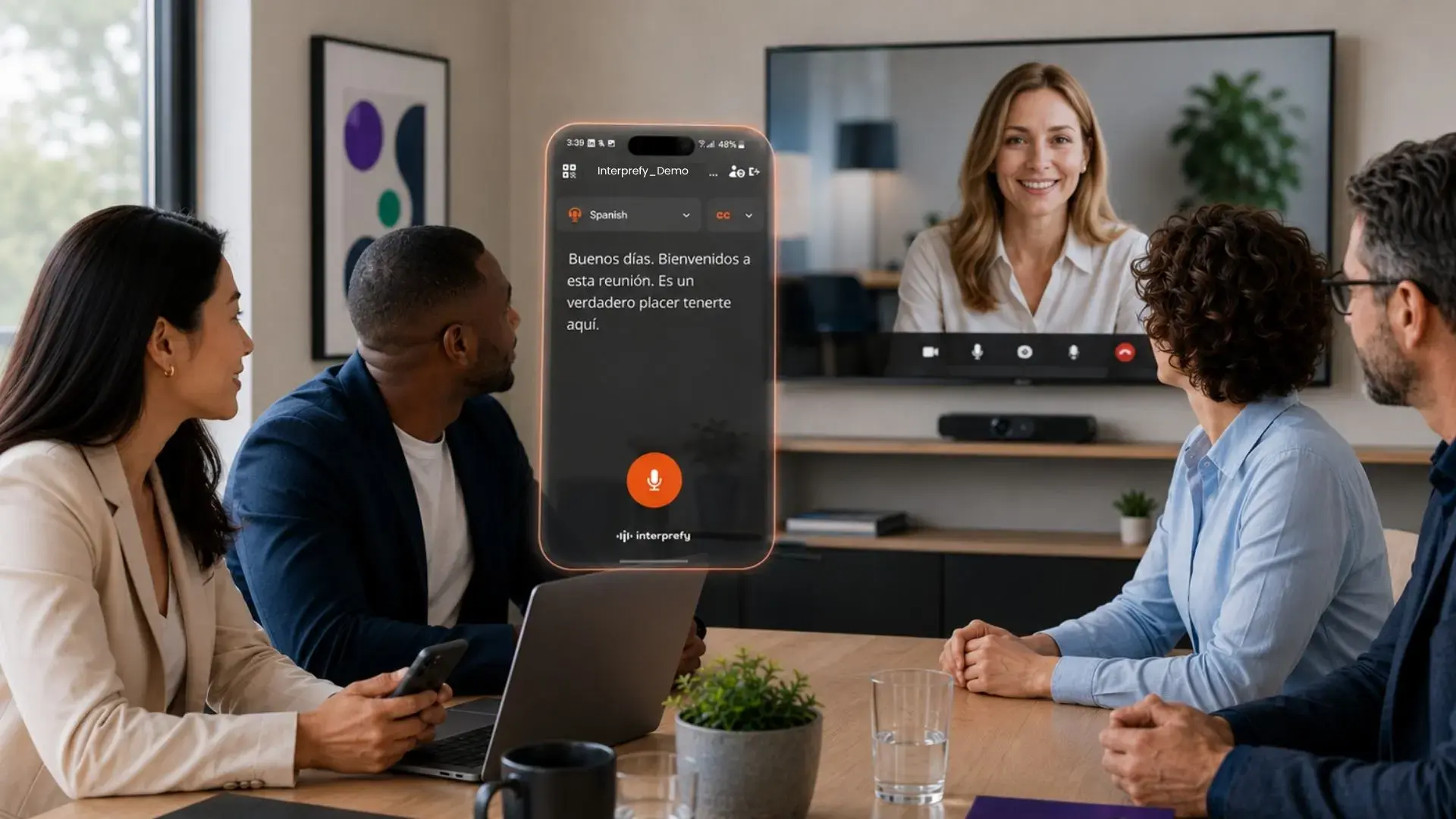
Communication Access Realtime Translation, also known as CART, is a real-time captioning service that turns spoken words into readable text as they are being spoken. It is mainly used to support deaf and hard-of-hearing people in live settings such as meetings, classrooms, hearings, conferences and public events.
Topics: Live Captions Accessibility & Compliance
7 min read
The EU AI Act and AI Speech Translation: Why Transparency Matters for Multilingual Events

The European Union Artificial Intelligence Act (EU AI Act) is changing how organisations think about artificial intelligence. For businesses using AI speech translation, AI-powered live captions, subtitles or post-event AI-translated recordings, transcripts or summaries in meetings and events, the key question is no longer only “does it work?” It is also “is it clear, responsible, compliant, and appropriate for the setting?
Topics: Live Captions AI & Live Machine Translation Accessibility & Compliance
5 min read
Best Automated Speech Translation for Town Hall Meetings
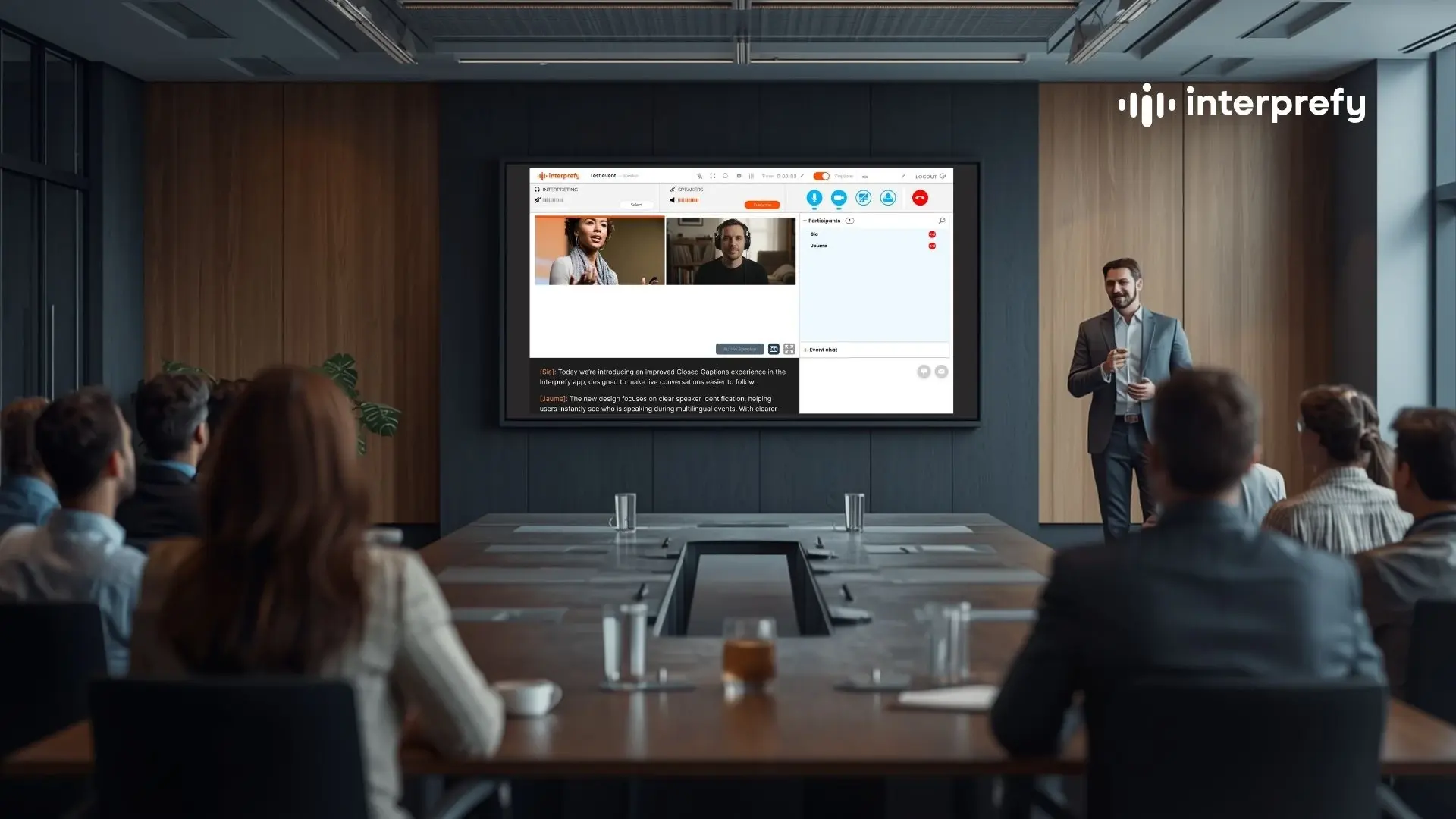
Town hall meetings are one of the most important communication formats in large organisations. They bring leadership and employees together, often across regions, time zones and languages. However, the challenge is clear. If people cannot follow the message in real time, the town hall stops being inclusive and starts becoming fragmented.

 Download from the App Store
 Download from Google Play
 More download links