Employees now trust their employer more than any other institution in their lives. According to the 2026 Edelman Trust Barometer, 78% of people trust their employer, ahead of business in general (64%) and government (53%). That figure looks like good news for leadership teams. It is also a warning.
5 min read
Why Trust Is the New Currency in Enterprise Communications

Topics: Event Planning and Hybrid Events Enterprise & Institutional Events
5 min read
Best Live Translation Apps for Events in 2026
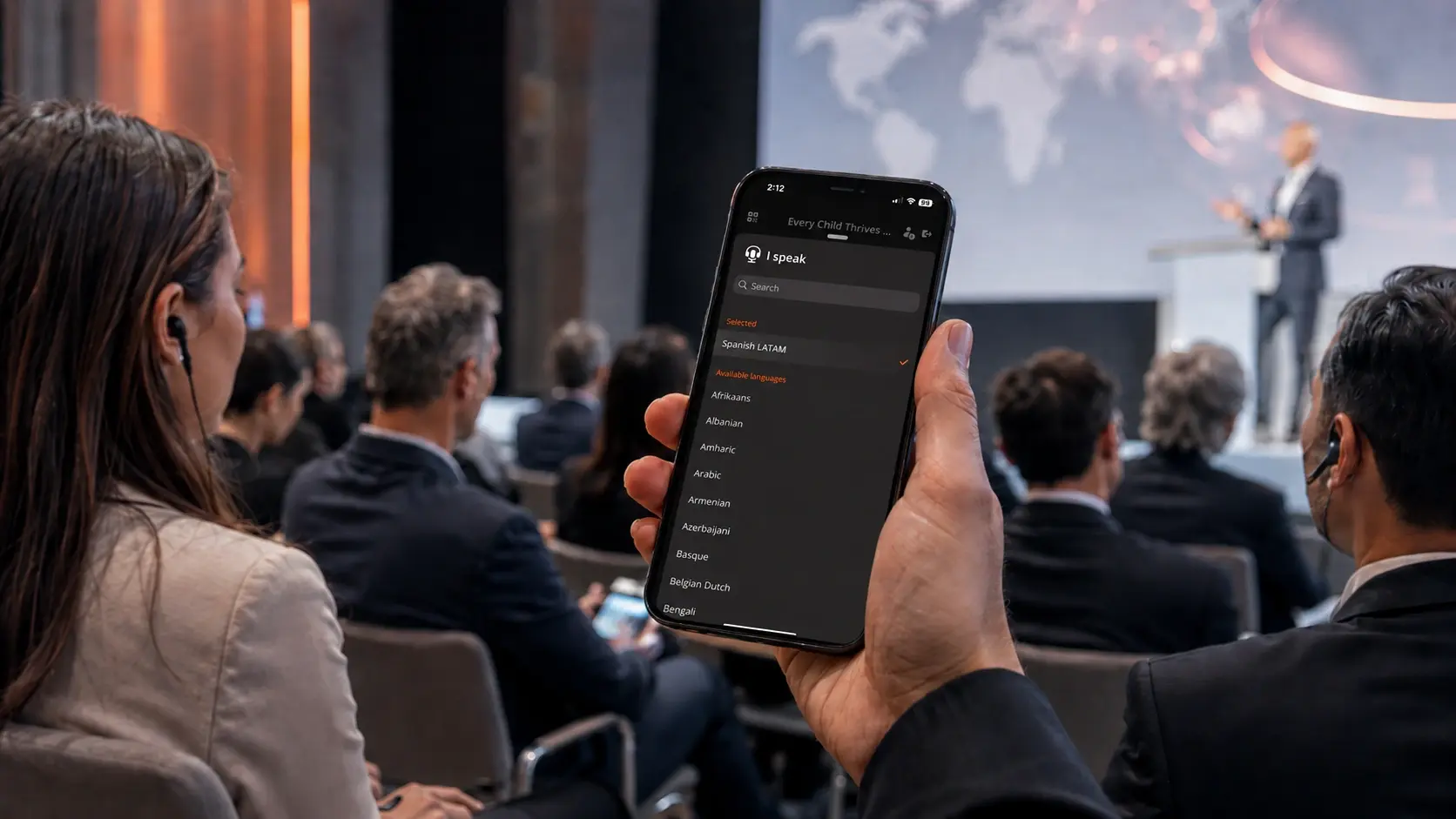
Picture a product launch with attendees joining from twelve countries, each expecting to follow along in their own language without a hitch. A few years ago, delivering that experience meant booking interpreters, installing booths, and hoping the technology held up on the day. Now it often means choosing the right app.
Topics: AI & Live Machine Translation Event Planning and Hybrid Events
4 min read
Top 8 Hidden Causes of Multilingual Meeting Breakdowns

A meeting can look successful in the moment and still fail the people in it. Everyone nods, the agenda gets through, and the call ends on time. Then the follow-up emails arrive, and it becomes clear that half the room understood something different from what was said. In multilingual settings, this gap is rarely caused by a single dramatic failure. It tends to come from a handful of small, hidden weaknesses in the speech translation platform and the way it is set up.
Topics: AI & Live Machine Translation Event Planning and Hybrid Events
5 min read
Audio Translation Services Pricing: A Buyer's Guide

Quoting audio translation can feel like comparing apples to oranges. One provider prices by the minute, another by the language pair, a third bundles everything into a flat event fee. For an events manager trying to budget a multilingual conference or hybrid town hall, the lack of a standard pricing model makes it hard to know whether a quote is reasonable before you've gathered several.
Topics: AI & Live Machine Translation Event Planning and Hybrid Events
12 min read
Real Time Captioning Services for Global Events: A Guide for Enterprise Event Teams
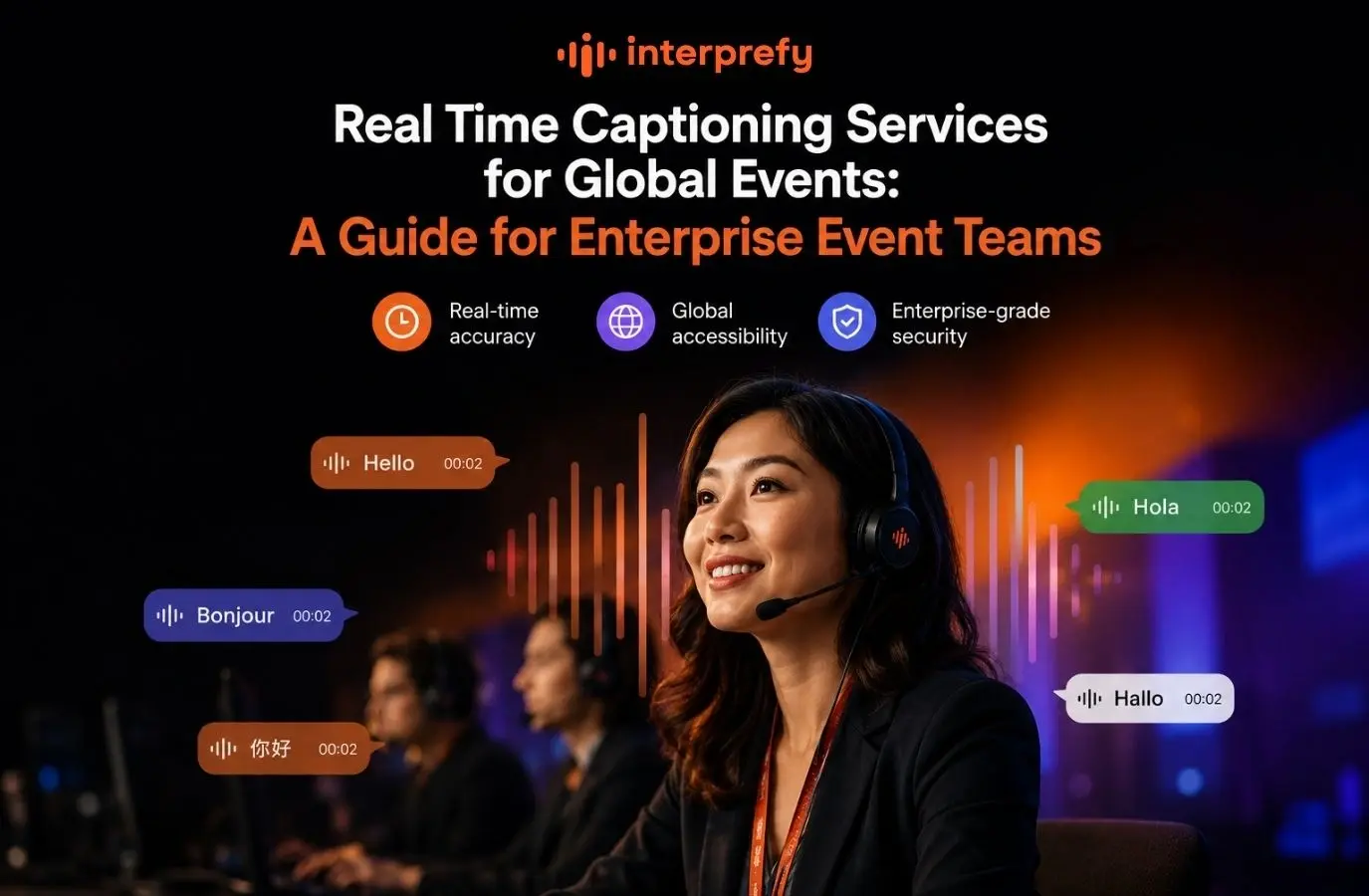
Imagine you’re at a multilingual event where interpretation was available and everything seemed inclusive, but you still missed a sentence and could not go back or follow everything was said. Sounds familiar? Perhaps the speaker moved too quickly, the audio dipped for a moment, or you were taking notes when an important point was made. At live events, even strong interpretation and good production do not always prevent information from being missed.
Topics: Live Captions Event Planning and Hybrid Events
12 min read
What Is Real Time Translation — And Why Does It Matter for Your Events and Meetings?
Think about the last large event you attended or organised. How many of the people in that room — or joining virtually from around the world — were expected to simply follow along in a language that wasn't their own?
Topics: AI & Live Machine Translation Event Planning and Hybrid Events
4 min read
Speech To Speech Translation: What It Is And When To Use It
Speech to speech translation is the process of converting spoken words in one language into spoken words in another language. Instead of asking participants to read translated text, the system delivers translated audio that helps people follow a meeting, event or presentation in their preferred language.
Topics: AI & Live Machine Translation Event Planning and Hybrid Events
17 min read
How Can Football Clubs Deliver Compliant Multilingual Press Conferences?

Every word matters in football. A manager’s explanation after a defeat, a captain’s message before a final, or a new signing’s first words to the press — these moments are broadcast across the globe, shaping headlines and club reputations.
But football isn’t spoken in just one language. From La Liga to the Premier League, from Serie A to the Champions League, clubs welcome players, journalists and broadcasters from every corner of the world. And UEFA’s regulations make sure those voices are included: press conferences must be accessible through simultaneous interpretation.
Topics: Accessibility & Compliance Event Planning and Hybrid Events Enterprise & Institutional Events
7 min read
Cisco Acquires EzDubs: What It Means for Event Organisers

The race to build AI-powered multilingual communication took another major turn this month as Cisco finalised its acquisition of EzDubs — the Y Combinator-backed real-time translation startup known for its voice-preserving technology. Cisco had initially announced its intent to acquire the company in November, and EzDubs will now be folded into Cisco’s Collaboration portfolio, including Webex, signalling an acceleration of Cisco’s ambition to make multilingual communication a native feature of its ecosystem.

 Download from the App Store
 Download from Google Play
 More download links