Quoting audio translation can feel like comparing apples to oranges. One provider prices by the minute, another by the language pair, a third bundles everything into a flat event fee. For an events manager trying to budget a multilingual conference or hybrid town hall, the lack of a standard pricing model makes it hard to know whether a quote is reasonable before you've gathered several.
This guide breaks down what actually drives the cost of audio translation services, so you can read a quote with more confidence and ask better questions before signing.
What Audio Translation Services Actually Cover
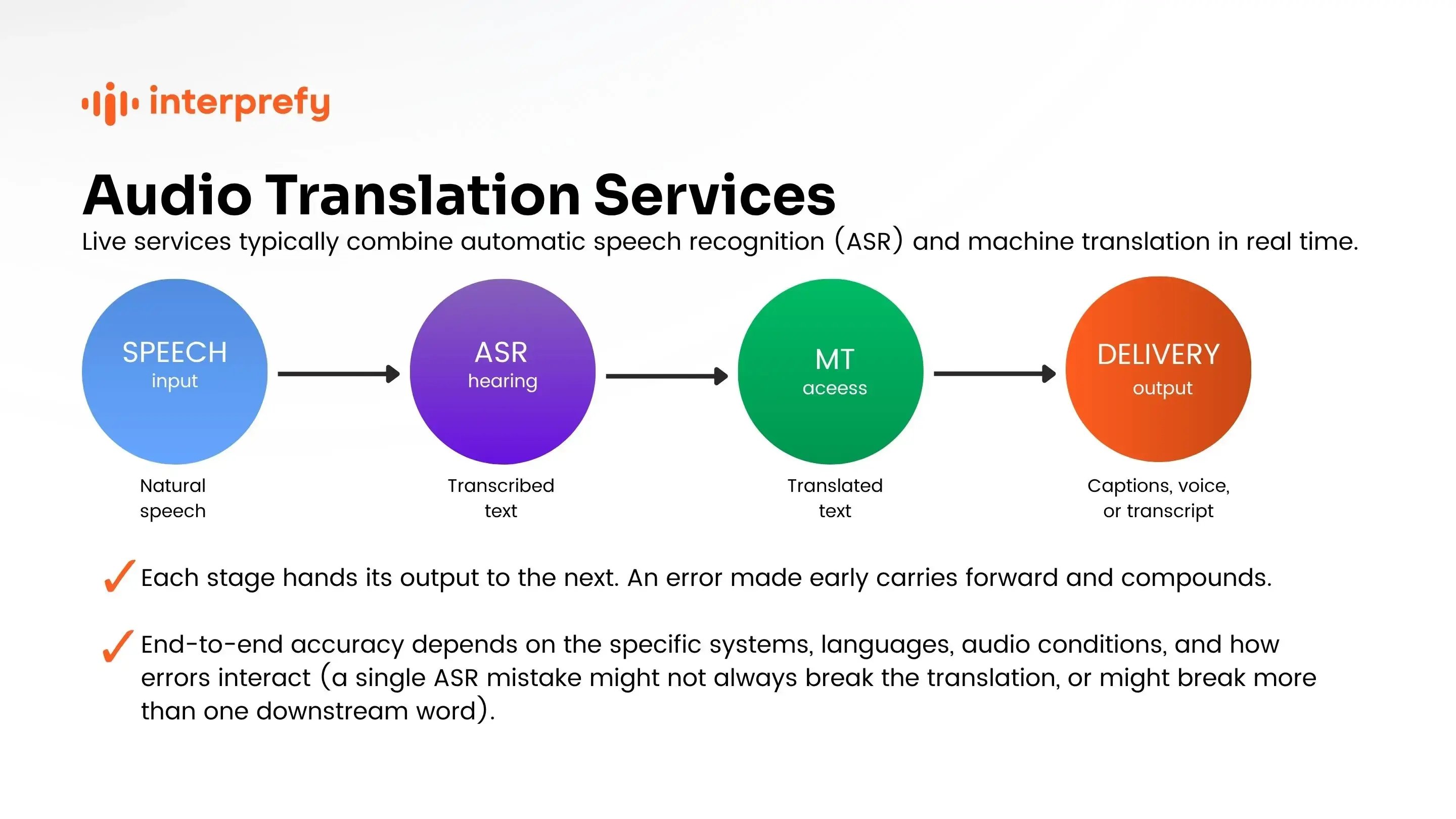
Audio translation services convert spoken content from one language into another, either live during an event or after the fact for recorded material. That can mean real-time speech-to-speech translation during a conference session, translated voiceovers for a recorded video, or a translated transcript delivered after a call. Each of these draws on a different mix of technology and labour, and that mix is the single biggest factor behind price variation.
Live services typically combine automatic speech recognition and machine translation, sometimes combine with human interpretation for higher-stakes sessions. Pre-recorded services have more time to refine output and often involve a human review pass, which adds cost but improves accuracy. Knowing which category your event actually needs is the first step to getting a realistic quote.
The Main Drivers of Cost For Audio Translation Services
Several variables move the price up or down, and it helps to know which ones matter most before you start comparing vendors.
Language pairs can influence price. As a general pattern across the language services market, common pairs such as English to Spanish or French tend to be more competitively priced, since the underlying technology and any human review layers are typically more mature and more widely available for those combinations. Less common or low-resource language pairs may cost more, as fewer providers support them well and quality assurance can take more effort. Exact pricing by language pair varies by provider, so it's worth asking directly during a quote.
Duration and volume also shape the bill. Live services are usually priced per hour or per session, while pre-recorded content is often priced per minute of source audio. Longer events or larger content libraries can usually unlock volume discounts, so it is worth asking about tiered pricing if you are translating recurring content rather than a one-off event.
The level of human involvement is another major lever. A fully automated audio translation pipeline costs less than one that includes human interpreters or post-editors checking the output, but the trade-off is accuracy and nuance. For a casual internal update, automation alone may be sufficient. For a regulatory presentation or a public-facing keynote, the added cost of human oversight is usually justified.
Finally, delivery format affects price. Live captions are generally less expensive to produce than a fully dubbed, synthesised voice track, since voice synthesis adds an extra production step. If your audience can read captions comfortably, this is often the more cost-effective choice.
How Providers Typically Structure Quotes
Most audio translation providers use one of a few pricing structures. Per-minute or per-hour pricing is common for live events and is usually the easiest to budget against, since you know your event's duration in advance. Per-word or per-minute-of-source-audio pricing is more typical for pre-recorded content, where the provider is billing against the volume of material rather than a live time slot.
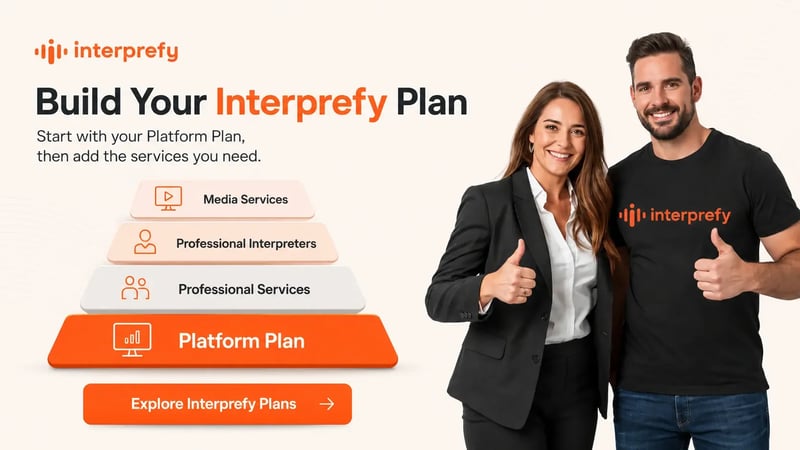
Some providers offer flat event packages that bundle setup, technical support, and a fixed block of translation hours, which can simplify budgeting for a single large event but may cost more if your actual usage runs lower than the package assumes. Subscription or platform-access models are also becoming more common for organisations running frequent multilingual meetings, since they spread cost across recurring usage rather than charging per event.
Questions to Ask Before You Sign
A useful pricing conversation goes beyond the headline rate. Ask whether the quote includes setup and technical support, or whether those are billed separately. Clarify whether pricing changes for less common language pairs, and whether there is a minimum booking duration that applies even if your actual need is shorter. Ask what happens if your event overruns, since live services billed by the hour can carry steep overage charges if this is not addressed up front. Finally, ask for a sample or a short pilot on your own content, since accuracy on your specific speakers and terminology affects whether the lower-cost option is actually viable for your use case.
Curious about Interprefy Pricing Models?
Visit Our Pricing Page to Learn More
Budgeting With Confidence
Audio translation pricing varies because the underlying service varies: language pair, duration, human involvement, and delivery format are not minor details, they are the main reasons one quote differs from another. Going into vendor conversations with a clear sense of what your event actually needs, rather than just a target budget, makes it far easier to compare quotes on a like-for-like basis and avoid surprises later.
To get a clear, tailored quote for your next multilingual event, explore Interprefy's AI Speech Translation platform.


 Download from the App Store
 Download from Google Play
 More download links