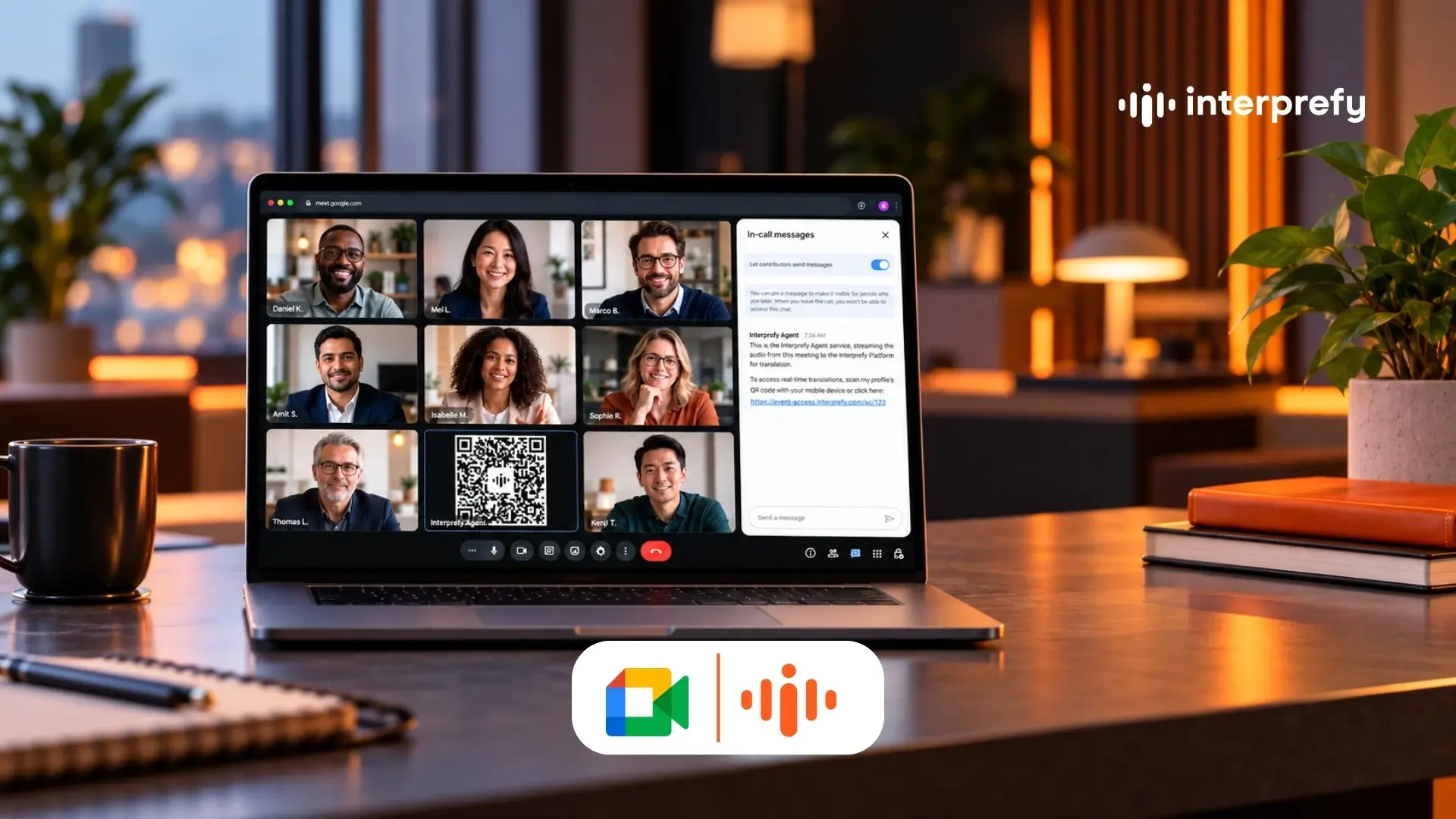
Picture a quarterly operations review on Google Meet. The regional leads join from Munich, Lahore, São Paulo and Osaka, and the host switches on Meet's speech translation expecting everyone to follow along in their own language. Within a minute it becomes clear that the feature can run only one language pair at a time, and that pair has to include English. The German speaker could be covered and so could the Portuguese speaker, but not both at once, while nobody on the call can hear the meeting in Urdu or Japanese at all.
8 min read
Google Meet Speech Translation Beyond English with Interprefy Agent
Topics: Live Captions AI & Live Machine Translation Microsoft Teams & Platform Integrations
8 min read
Zoom AI Translation vs. Interprefy Agent: The Real Difference
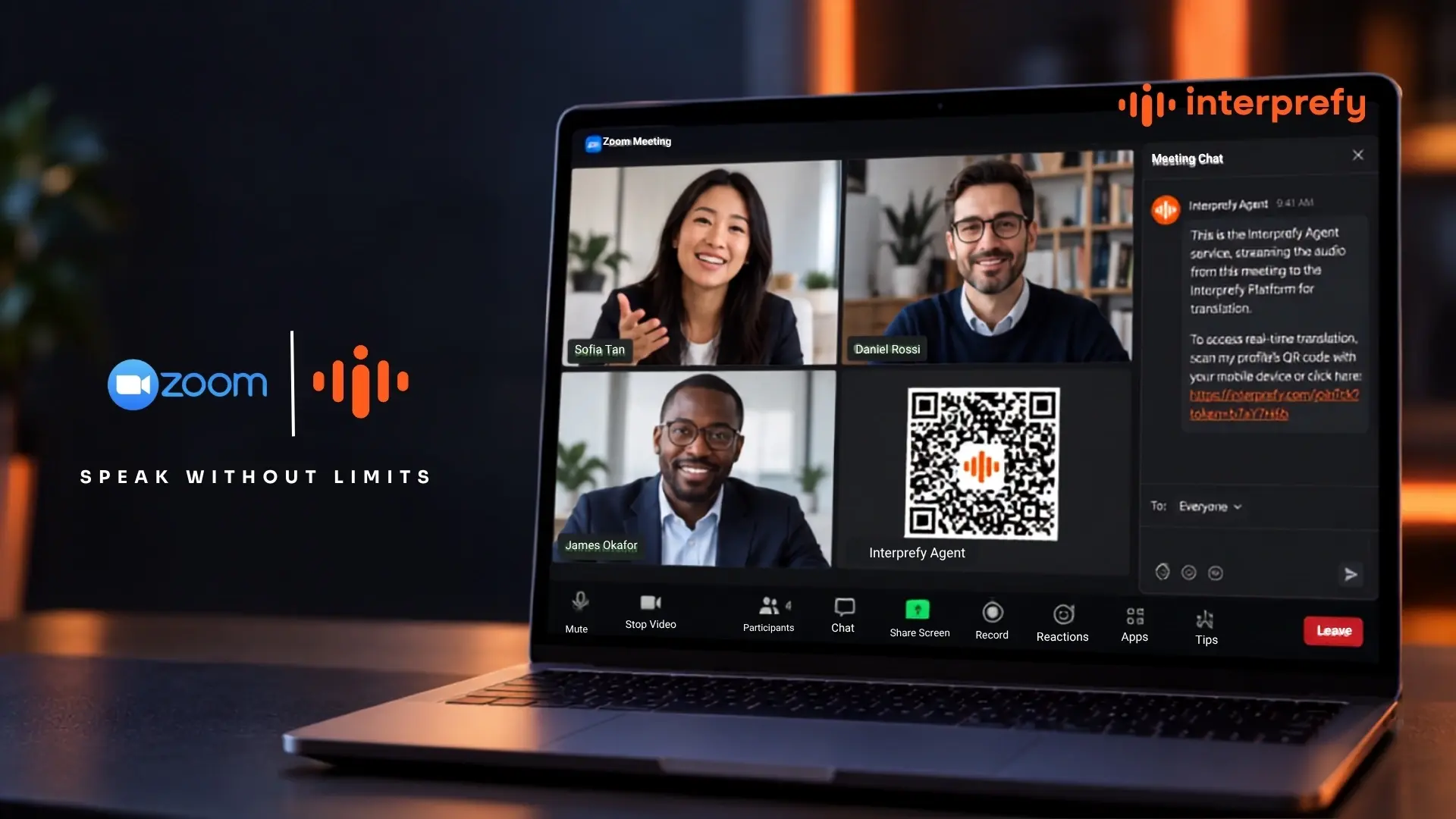
Zoom quietly changed the conversation around multilingual meetings this year. It launched Voice Translator in beta, its first attempt at converting a speaker's voice into another language automatically, without a human interpreter in the loop. For organisations that have spent years relying on dedicated interpretation platforms such as Interprefy Agent to run global meetings, the obvious question is whether Zoom's own feature now replaces what they already have in place.
Topics: Live Captions AI & Live Machine Translation Microsoft Teams & Platform Integrations
20 min read
How to Cut Interpreter Costs With AI Translation
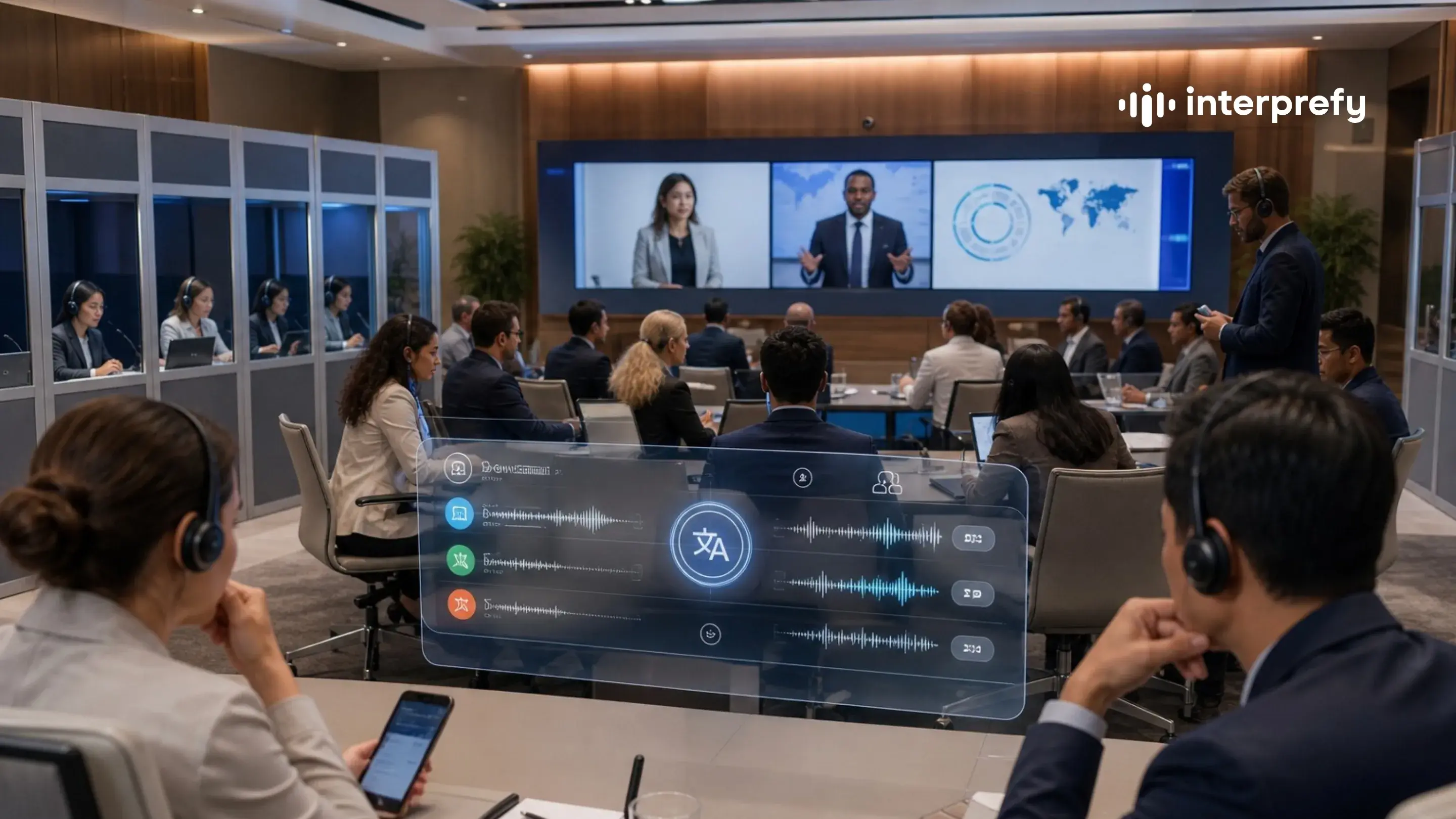
Multilingual events have long carried a predictable budget line: interpreters. For a full-day conference in three languages, traditional setups require six professionals rotating through physical booths, plus travel, equipment, and coordination costs that can reach $13,000 or more. For many meetings, those costs put interpreting services out of reach altogether. Now, AI speech translation is changing the calculation. Enterprise teams can extend multilingual access to more sessions, more languages, and more attendees without the per-event spend that once made interpretation a rationed resource.
Topics: How-To Guides AI & Live Machine Translation
12 min read
How to Access Captions and Transcripts After Your Multilingual Event
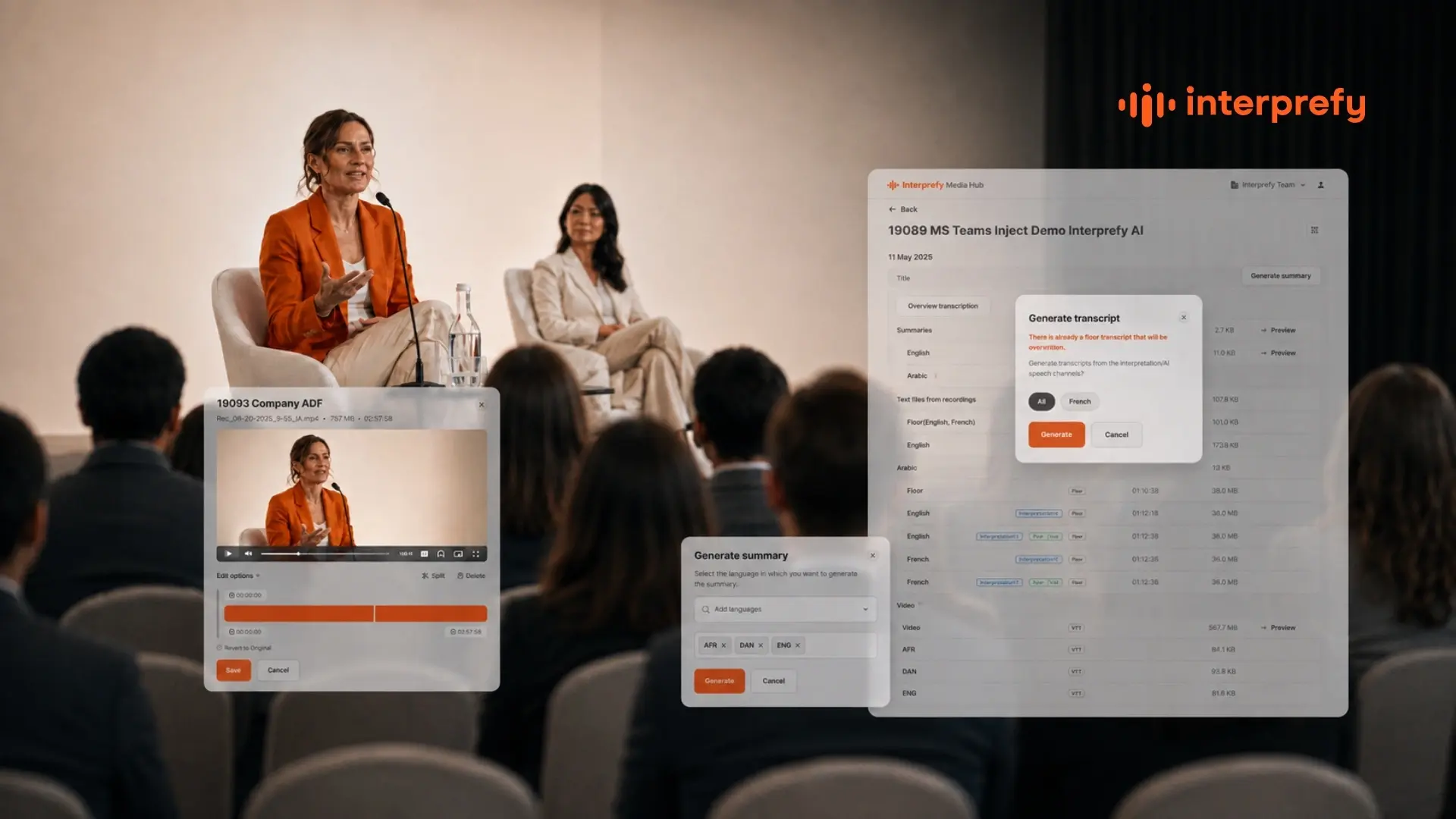
Every multilingual event generates far more than a memory of the day. Recordings, captions and transcripts pile up in the background while the event itself takes centre stage, and once the closing remarks are done, that content often just sits there. Someone eventually asks for the French transcript from the breakout session, or the English captions from the keynote, and the search begins.
Topics: Live Captions AI & Live Machine Translation Interpreters & Professional Services
11 min read
Interprefy Agent for Microsoft Teams: How It Works and Why It Helps
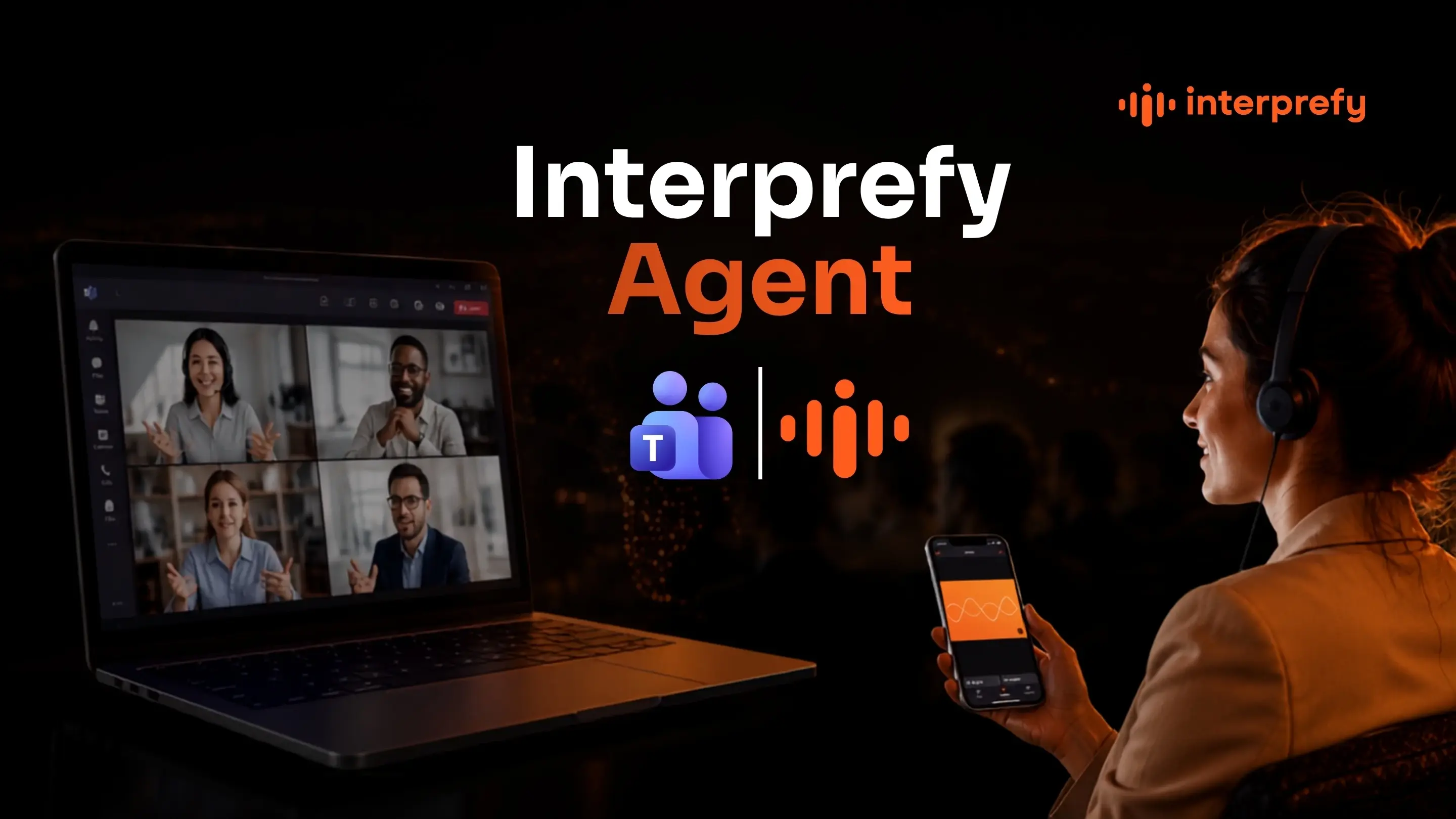
Microsoft has spent 2026 adding real interpretation muscle to Teams: automatic language detection, a consecutive mode for negotiations, support for dedicated room hardware. For an organisation working mainly in English and Spanish on a Copilot licence, that might cover most meetings on its own. For most global organisations it does not, and the gap between what Teams now offers natively and what a multilingual workforce actually needs is exactly where an interpretation platform earns its place.
Topics: Live Captions AI & Live Machine Translation Microsoft Teams & Platform Integrations
4 min read
On-Screen Captions for Onsite Events Explained
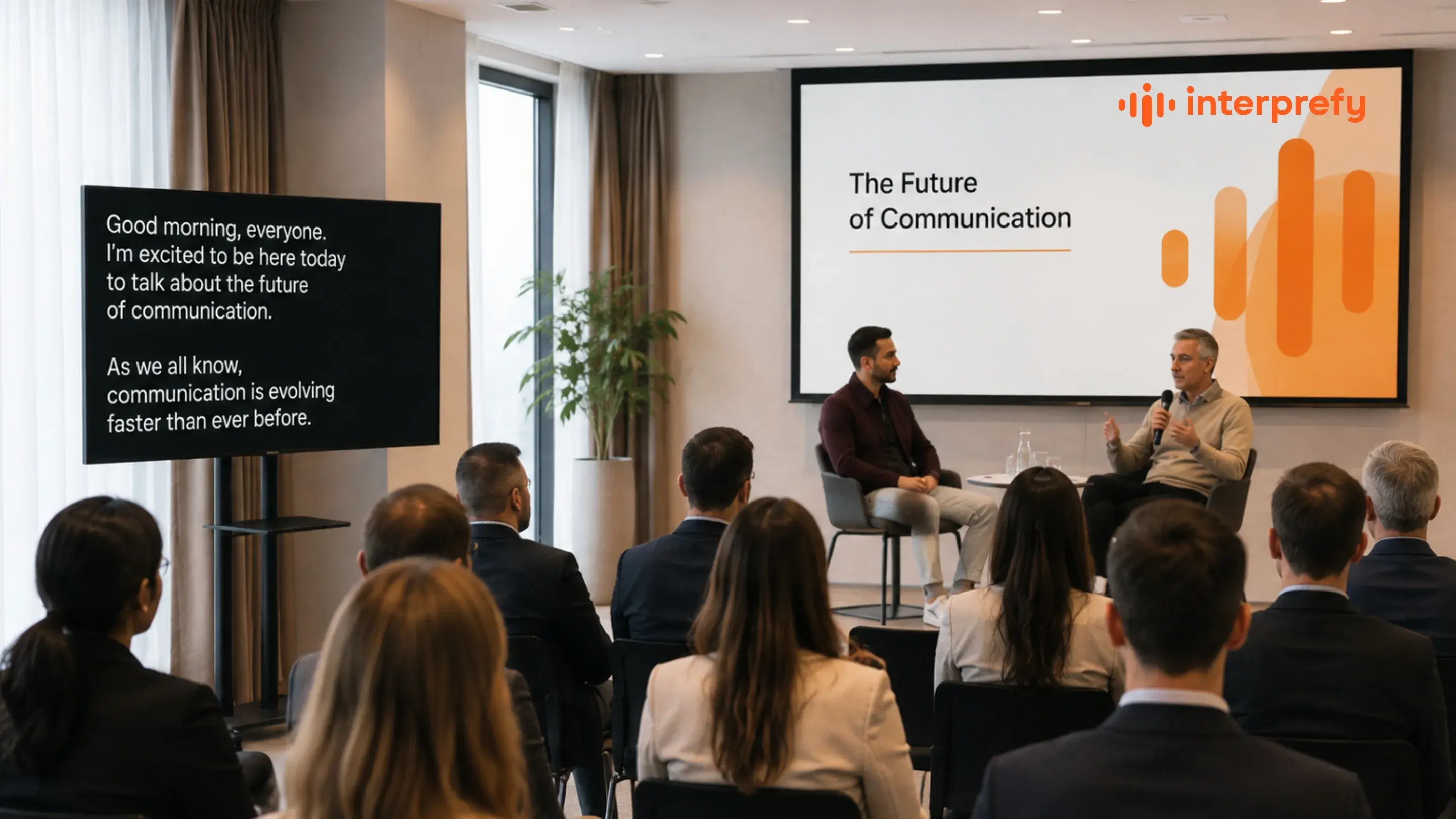
Walk into a large conference hall or auditorium today and you will often see a screen at the front of the room carrying more than slides. Underneath the speaker's name, or along the bottom third of the display, a live transcript of what is being said scrolls in real time. This is on-screen captioning, and it has moved from a niche accessibility feature to a standard expectation at well-run onsite events.
Topics: Live Captions AI & Live Machine Translation
4 min read
What Security Standards Should Automatic Speech Translation Meet?

Every AI speech translation session carries a conversation that someone considered worth having in real time, whether it's a board discussion, a diplomatic briefing, or a clinical consultation. That conversation gets captured as audio, processed by machine translation models, and often stored or logged somewhere along the way. If the underlying infrastructure isn't secured properly, the convenience of instant multilingual communication comes with a data protection risk that's easy to overlook until it's tested.
Topics: AI & Live Machine Translation Accessibility & Compliance
4 min read
Fair Multilingual AI: Why The EU MMLU Benchmark Matters for AI Live Translation
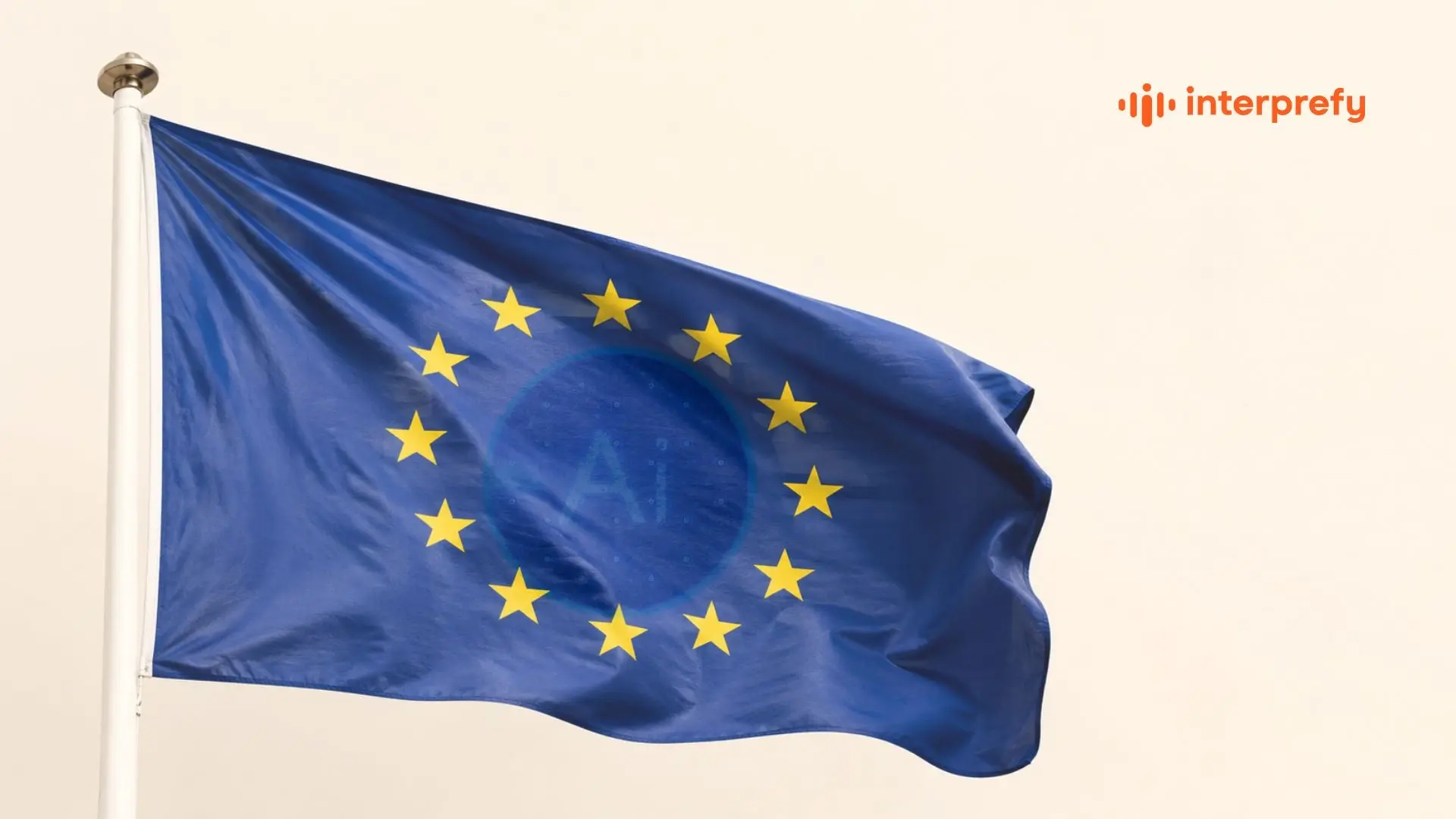
Most conversations about AI language performance still centre on English. A model scores well on a standard benchmark, gets praised as state-of-the-art, and is rolled out for global use. But a growing body of evidence, most recently the European Commission's new EU MMLU dataset, shows that strong English performance says very little about how a model handles French, Hungarian or Maltese. For anyone relying on AI live translation at international events, that gap is not an academic footnote. It is the difference between a delegate understanding a keynote and missing it entirely.
Topics: AI & Live Machine Translation Enterprise & Institutional Events
5 min read
What Is AI Dubbing and How Does It Work?
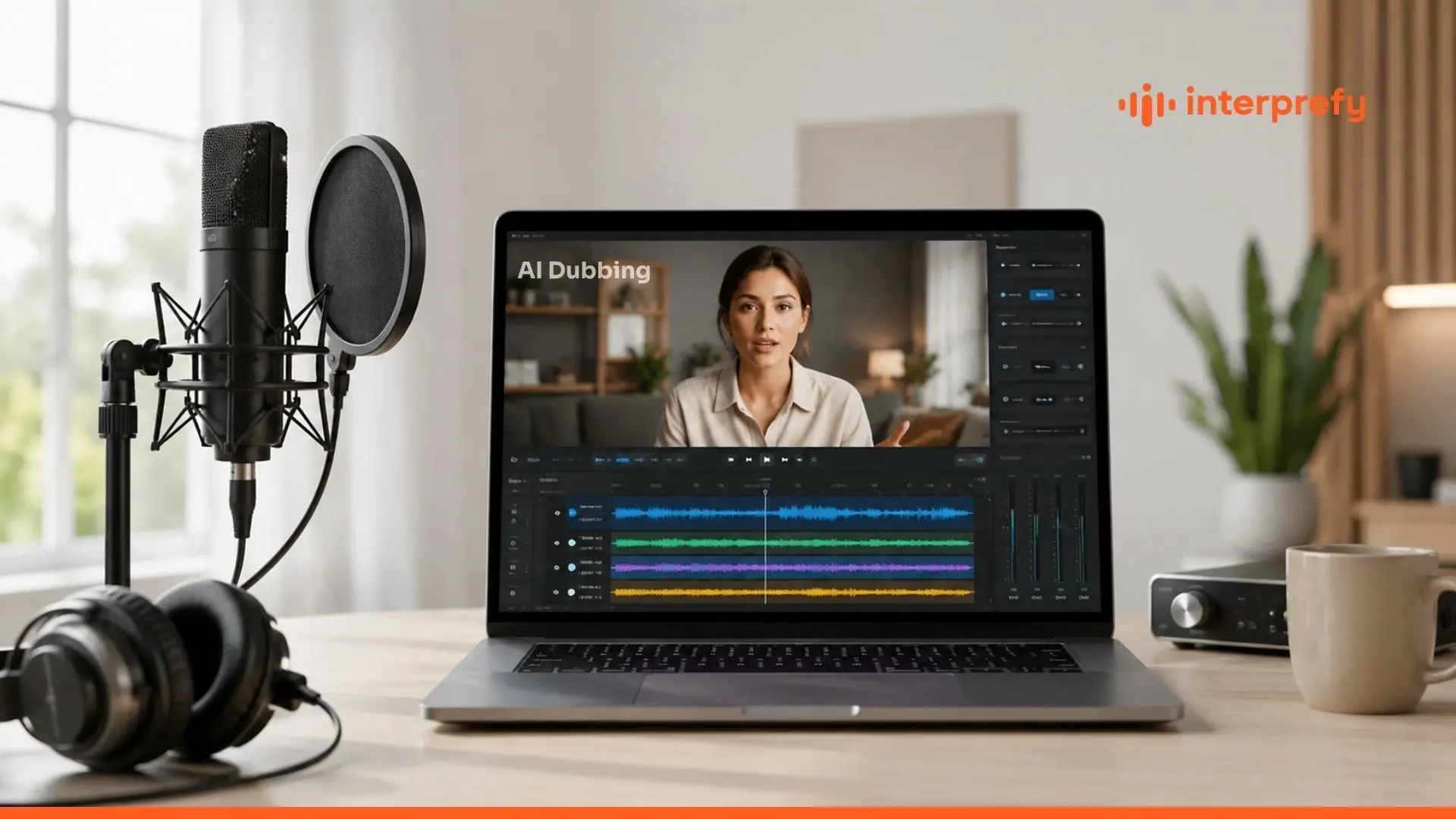
Picture a training video recorded once in English that a global workforce needs in ten languages by Friday. A decade ago, that request meant hiring voice actors, booking studio time, and waiting weeks for each language. Today, it can mean uploading a file and downloading a dubbed version in hours. This shift is powered by AI dubbing.

 Download from the App Store
 Download from Google Play
 More download links