
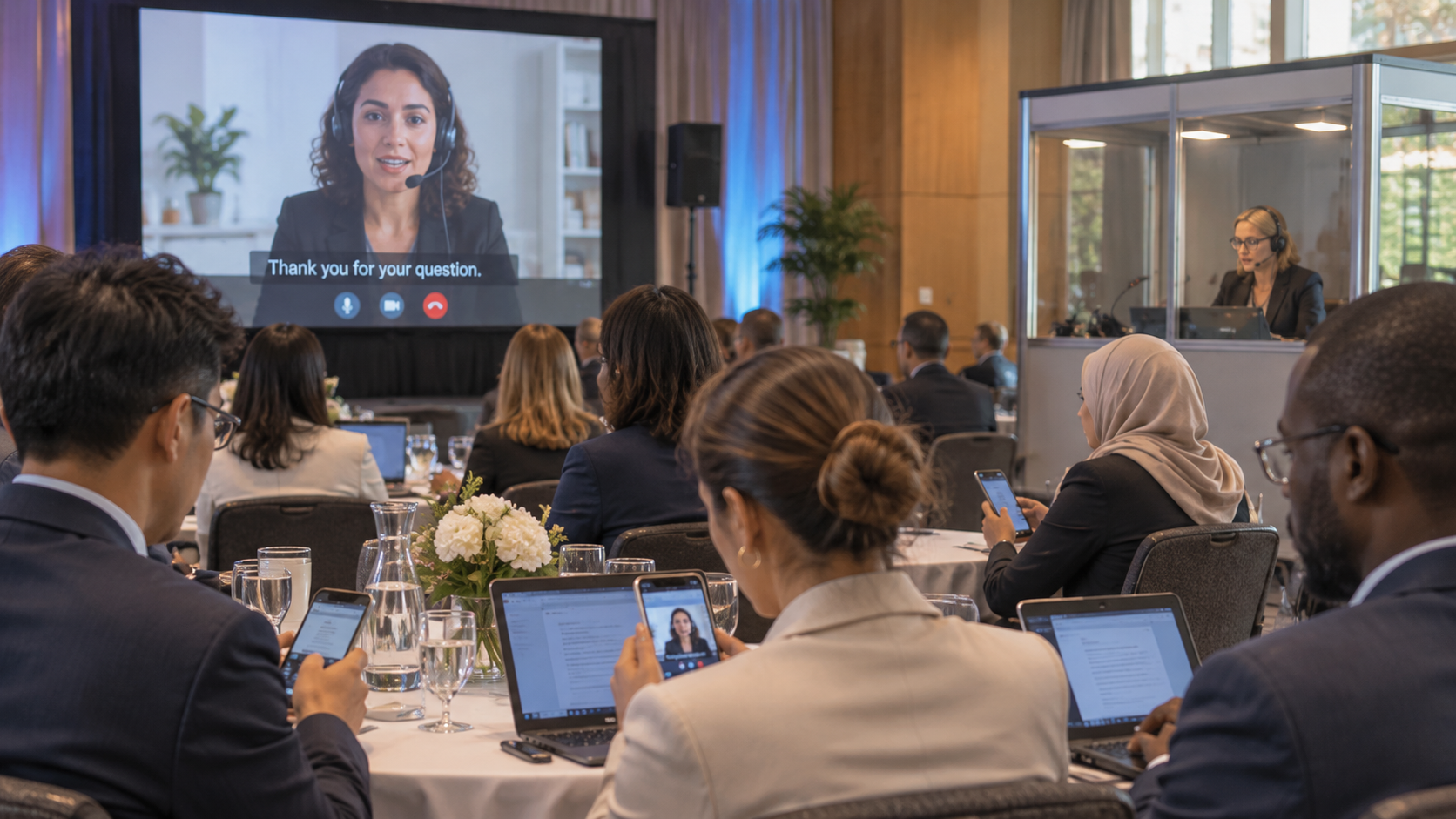
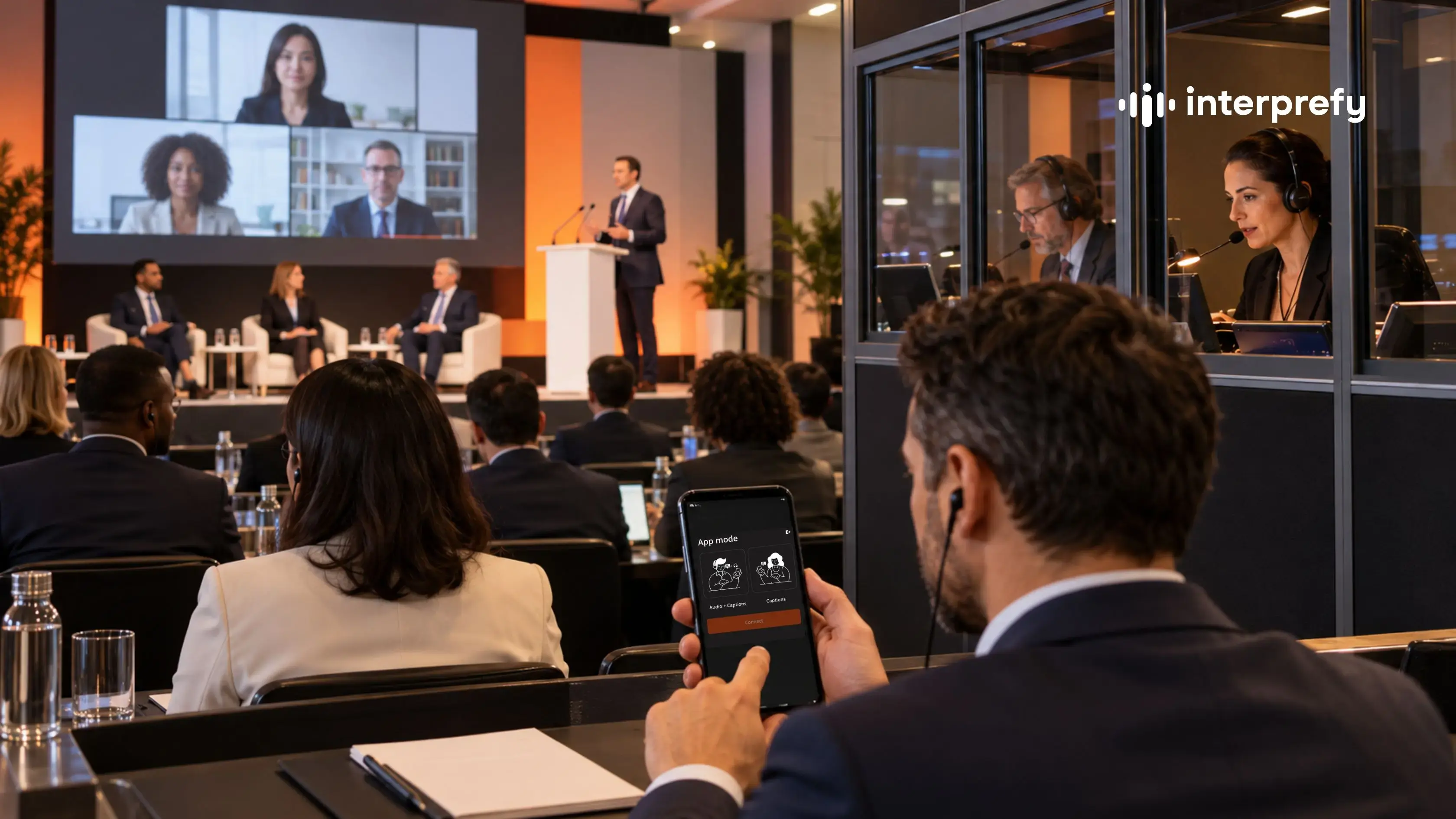
A complete simultaneous interpretation equipment setup includes speaker microphones, an interpreter booth, an interpreter console, a transmitter, one channel per language, receivers with headsets and a technician. Audio runs from the speaker to the interpreter, then out to each listener. Cloud and hybrid setups move interpreters off site and can replace receivers with phones.

Dayana Abuin Rios
Recent posts by Dayana Abuin Rios
13 min read
Simultaneous Interpretation Equipment: What a Complete Setup Includes
Topics: Remote Simultaneous Interpretation Event Planning and Hybrid Events
8 min read
Workplace Language Access Without Compromising Trust

Every organisation says its people are its greatest asset. Far fewer can say that all of those people hear the same message, in a language they fully understand, at the same time, and feel equally able to respond.
Topics: AI & Live Machine Translation Accessibility & Compliance
13 min read
Who Is Responsible when AI Gets it Wrong?

For most of its history, professional interpretation came with a safety net built in. The organisations that could afford interpreters usually also had people who knew how to work with them: event teams, language-services managers, conference organisers who knew to send the slides in advance and book the right specialists. Mistakes still happened, but there was expertise around the booth.
Topics: AI & Live Machine Translation Accessibility & Compliance
12 min read
Interpretation for Regulated Industries: Finance, Legal and Public Sector Events
In most meetings, a mistranslated phrase costs a moment of confusion. In an investor call, a regulatory hearing or a pharmaceutical advisory board, it can end up as a correction to the market, a complaint or a formal finding.
That changes what good interpretation means. AI speech translation has improved quickly, and for many sessions it’s now accurate, fast and far cheaper than booking interpreters. But regulated organisations don’t only ask whether the translation was right. They ask who was responsible for it, how the data was handled and what record exists afterwards.
Topics: Live Captions Multilingual Communication & Inclusion Microsoft Teams & Platform Integrations
21 min read
Medical Conference Interpretation: A Guide for Congress Organisers

A large medical congress runs on precision. Thousands of clinicians move between plenaries, parallel tracks, industry symposia and poster halls, and much of what they hear may shape how they treat patients within weeks. When delegates follow that content in a second language, a misunderstood dosage, endpoint or contraindication is more than an awkward moment, because it can travel back into clinical practice.
Topics: Remote Simultaneous Interpretation AI & Live Machine Translation Healthcare Pharmaceutical & Life Sciences
17 min read
When to Use Consecutive vs Simultaneous Interpretation
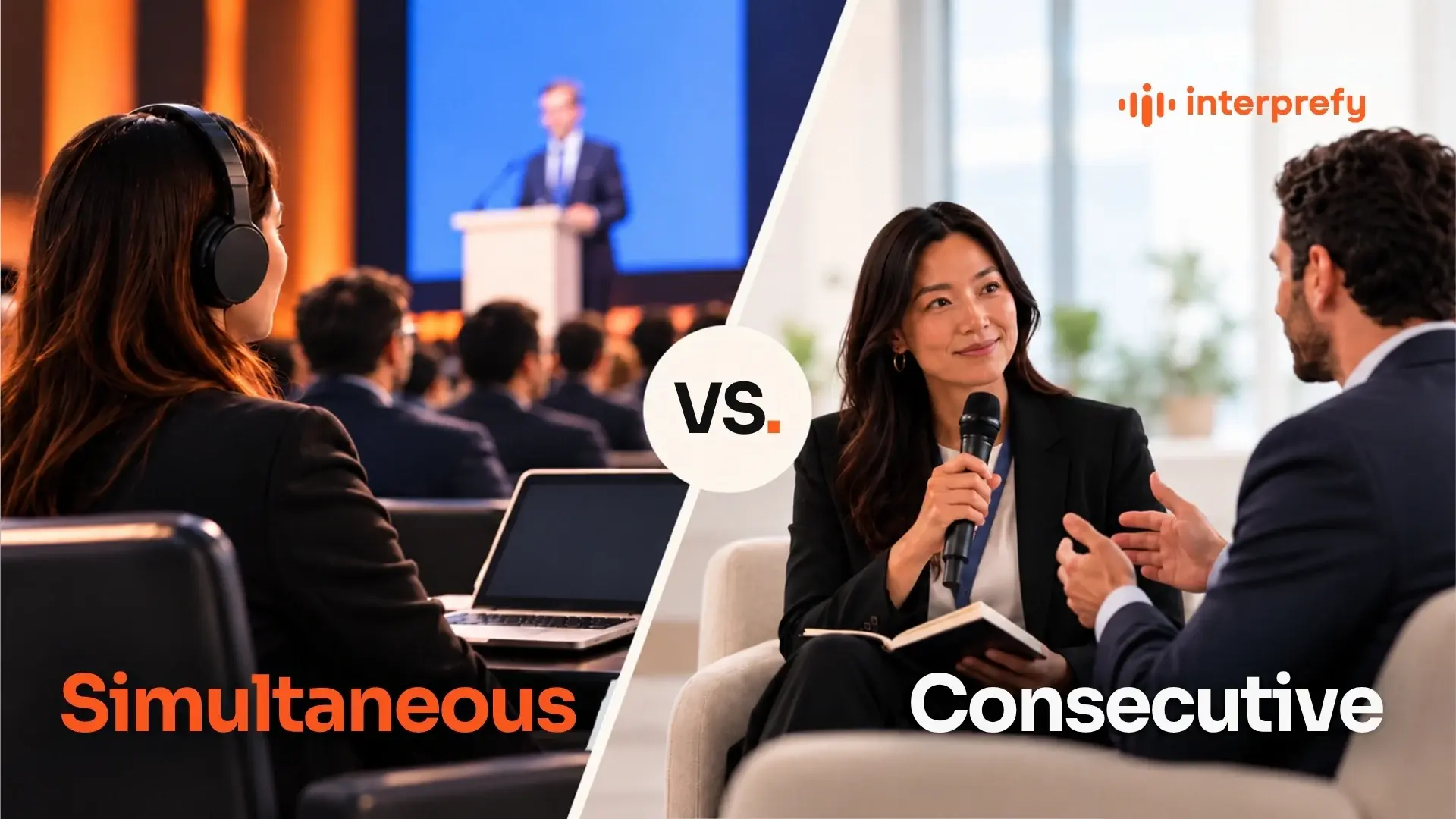
Picture an international delegation visiting your headquarters for two days. The programme opens with a plenary for 200 people in three languages, moves on to a factory tour, includes a private meeting between the two heads of delegation and ends with a press conference. Your interpretation provider asks a simple question: consecutive or simultaneous? The honest answer is both, but for different parts of the day, and getting that split wrong costs you either time or money.
Topics: Remote Simultaneous Interpretation
8 min read
Google Meet Speech Translation Beyond English with Interprefy Agent
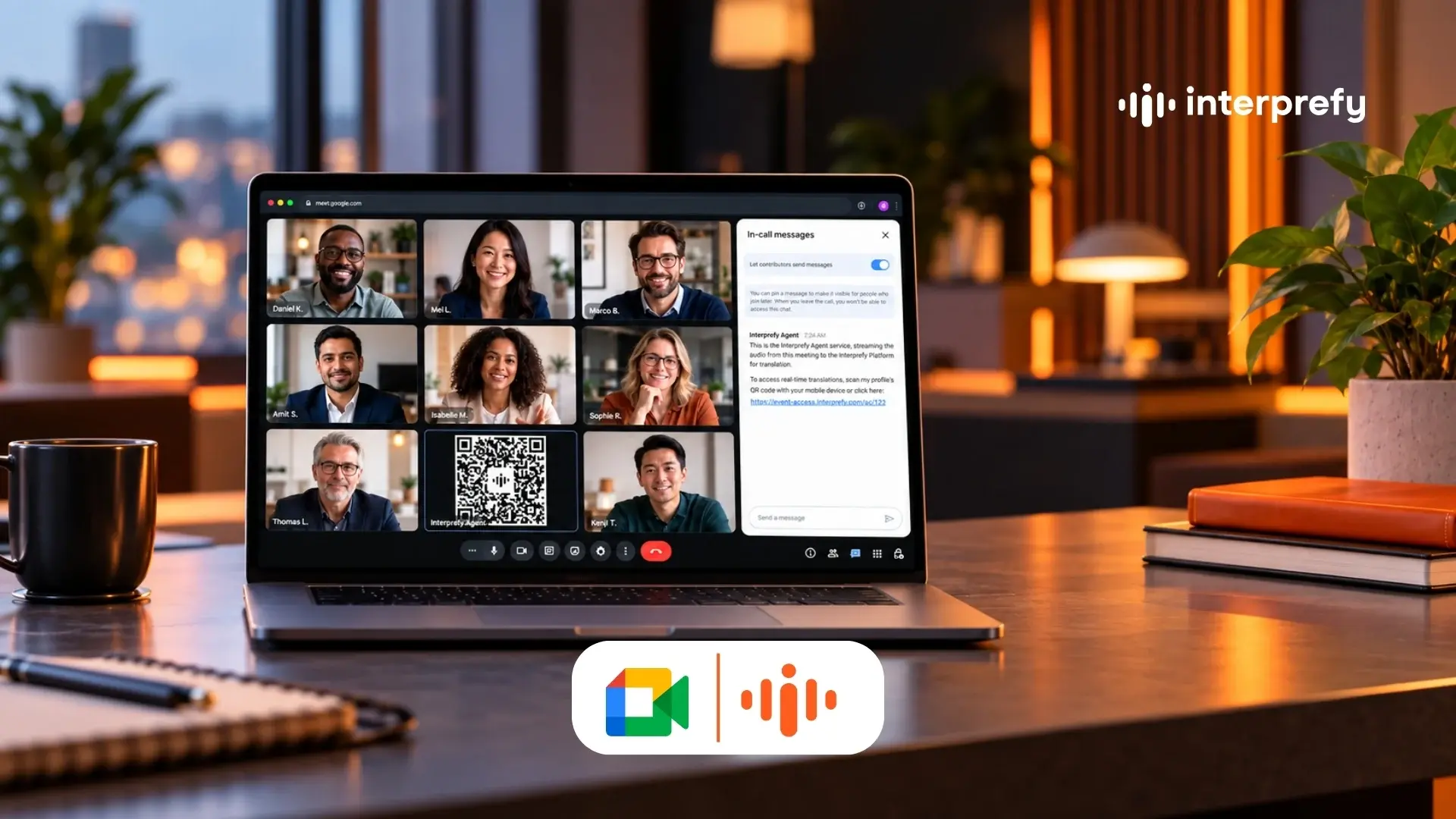
Picture a quarterly operations review on Google Meet. The regional leads join from Munich, Lahore, São Paulo and Osaka, and the host switches on Meet's speech translation expecting everyone to follow along in their own language. Within a minute it becomes clear that the feature can run only one language pair at a time, and that pair has to include English. The German speaker could be covered and so could the Portuguese speaker, but not both at once, while nobody on the call can hear the meeting in Urdu or Japanese at all.
Topics: Live Captions AI & Live Machine Translation Microsoft Teams & Platform Integrations
18 min read
The Ultimate Guide to Remote Simultaneous Interpretation
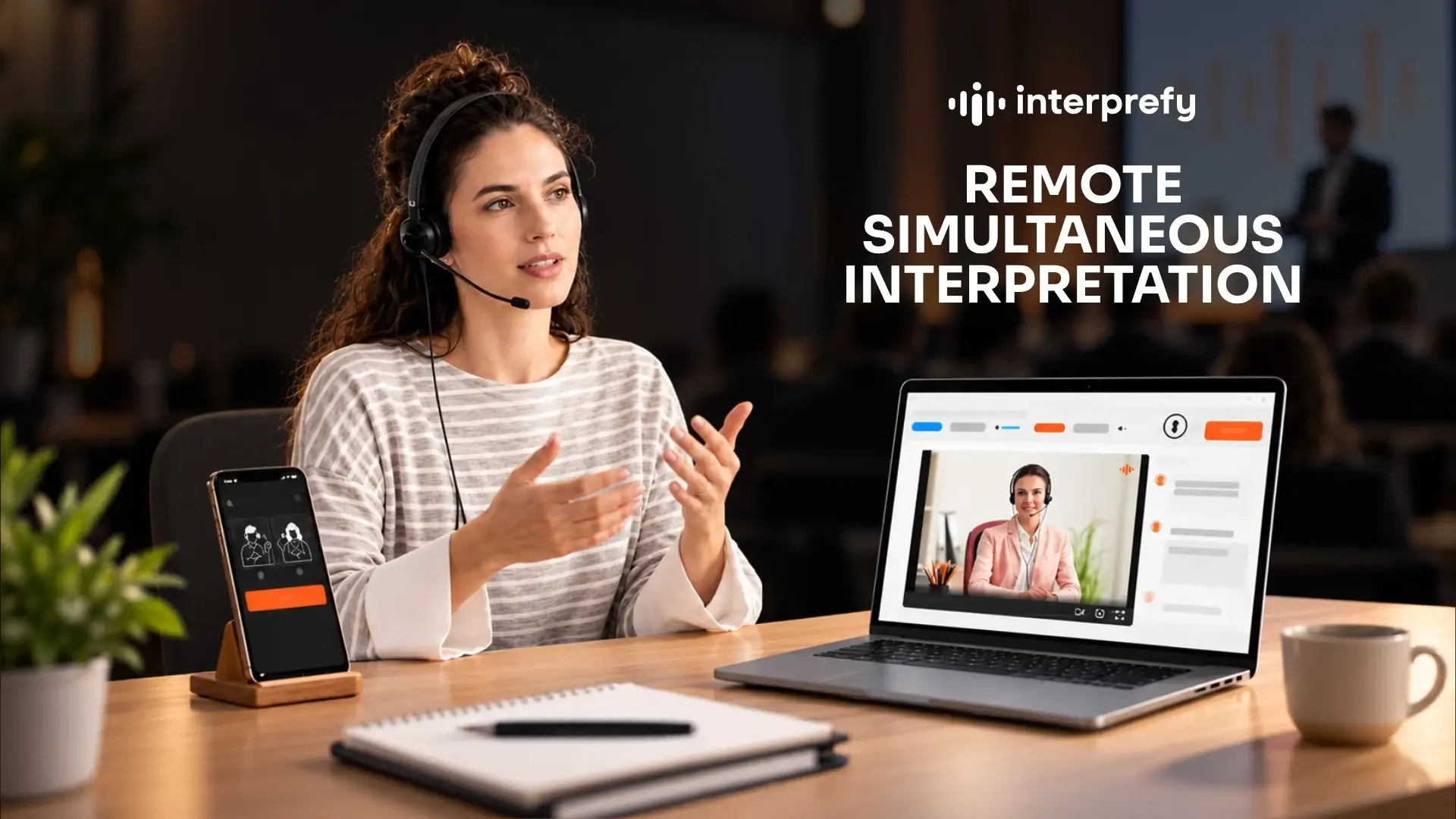
Remote simultaneous interpretation (RSI) is the process of remotely interpreting speech from one language to another in real time. Using cloud-based technology, RSI connects interpreters, speakers, and participants from anywhere in the world. It reduces costs, increases flexibility, and makes multilingual communication accessible for events and meetings of any size - from small business meetings to large international conferences.
Topics: Remote Simultaneous Interpretation Interpreters & Professional Services
5 min read
Why ISO 27001 Should Be Non-Negotiable for Remote Interpretation
ISO 27001 certification is the clearest way to verify that a remote interpretation platform actually protects sensitive, spoken conversations rather than simply claiming to. For any organisation buying interpretation services for confidential or regulated content, it should sit near the top of the vendor evaluation checklist, not as an afterthought.

 Download from the App Store
 Download from Google Play
 More download links