

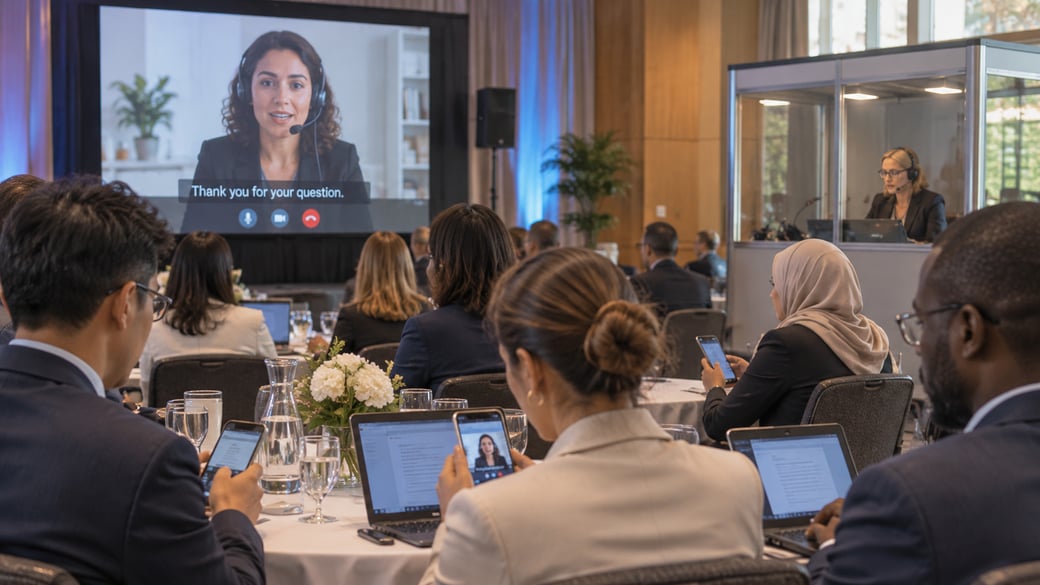
A complete simultaneous interpretation equipment setup includes speaker microphones, an interpreter booth, an interpreter console, a transmitter, one channel per language, receivers with headsets and a technician. Audio runs from the speaker to the interpreter, then out to each listener. Cloud and hybrid setups move interpreters off site and can replace receivers with phones.
Most equipment quotes arrive as a list of items, which makes it hard to see whether anything is missing. A booth without a console, or a hundred receivers with no plan for the second language, is not a setup. This guide follows the audio from the speaker's microphone to the delegate's ear. It then compares hardware, cloud and hybrid options and gives you a simple way to size a setup. If you need to decide whether to rent, buy or go cloud, our guide to equipment sourcing covers that decision.
In this article
- What does a complete simultaneous interpretation setup include?
- How does a simultaneous interpretation system work?
- What should you know about booths, consoles, receivers and headsets?
- How does Interprefy work with hardware, cloud and hybrid setups?
- How do you size a simultaneous interpretation setup??
- What about tours, site visits and small groups?
- How do you choose a setup with Interprefy?
- Frequently Asked Questions (FAQs)
What Does a Complete Simultaneous Interpretation Setup Include?
An onsite hardware setup needs seven parts, and a gap in any one of them stops the interpretation. Cloud setups replace some of them, as the comparison further down shows. The table below shows what each part does and the question worth asking about it.
Microphone quality at the speaker's end decides how good the interpretation can be, because interpreters can only render what they hear clearly. If interpreters work remotely, their own laptop and headset requirements are covered in our best headsets for remote interpreters guide.How Does a Simultaneous Interpretation System Work?
A simultaneous interpretation system carries the speaker's voice to the interpreter and the interpretation to each listener in near real time, using one channel per language. The path has six steps:
1. The speaker talks into a microphone, and the floor audio goes to the interpreter booth.
2. The interpreter listens on a headset.
3. The interpreter speaks into the console microphone while the speaker is still talking.
4. The console sends that language out on its own channel.
5. The transmitter broadcasts every channel into the room, by infrared or radio.
6. Each delegate's receiver selects one channel, and the delegate hears it in their headset.
Two functions on the console keep this running smoothly. Relay means an interpreter works from another interpreter's output rather than the speaker's, which is how a room covers a language pair no one in the booths interprets directly. Hand-over lets interpreters swap turns without a gap in the audio. Both run through the console, so check that yours supports them.
For the wider picture of what remote simultaneous interpretation is and why organisations use it, read The Ultimate Guide to Remote Simultaneous Interpretation.
What Should You Know About Booths, Consoles, Receivers and Headsets?
Booths:
Booths have to isolate sound and give interpreters a clear view of the speaker and any slides. ISO 20109:2025, "Simultaneous interpreting - Equipment - Requirements", sets out requirements for the equipment and for the quality of sound and image transmitted to interpreters and from interpreters to the audience, wherever the speakers, audience and interpreters sit. It replaced the 2016 edition. In 2026, though, many events no longer need onsite booths at all. Interprefy was built in 2014 to solve exactly that problem, with a cloud platform that lets interpreters work from remote booths, and the same platform now delivers AI speech translation and live captions too. For the case for virtual booths, see why it is time to upgrade to virtual interpreter booths.
Consoles:
The console is where the interpreter's work becomes a channel. Hard consoles are physical desks, soft consoles run in software and cloud consoles run in a browser. Each has different consequences for your event, and Interprefy's [Hard Consoles](/solutions/integrations/hard-consoles) integration covers the physical kind.
Receivers and transmitters:
The main choice is infrared or radio. Rental suppliers commonly advise that infrared needs line of sight and suits indoor rooms where confidentiality matters, whereas radio passes through walls and suits outdoor or multi-room venues.
Headsets:
Delegates need a comfortable headset they can wear for hours, and interpreters need one with good isolation and clear sound. Plan spares in both cases.
How Does Interprefy Work With Hardware, Cloud and Hybrid Setups?
A traditional hardware setup puts interpreters in booths at the venue and gives delegates receivers. A cloud setup lets interpreters work from anywhere and lets delegates listen on their phone, laptop or other device. A hybrid setup keeps the booths and consoles in the room and connects them to a cloud platform.
For hybrid events, lets your AV team link the onsite booth hardware into the cloud interface through standard audio out and in. According to that page, interpreters keep using their usual console, handling channels, relay and hand-over as normal, and Interprefy's project management and technical teams support booth set-up, sound-checks and live operations. Allow extra set-up and sound-check time, and confirm your console set-up with Interprefy's team before the event. Where an event does need onsite hardware, Interprefy works with AV partners. Our guide to equipment sourcing has the full detail.
On the delegate side, the Interprefy Mobile App means attendees do not need a dedicated interpretation receiver. They listen on their own laptop, tablet or phone with headphones or another audio output, and the app works onsite, online or hybrid, with any number of languages. Receivers are the part of a hardware setup that grows with your audience, so the app removes that item from the list. For more on where this approach sits among other options, see our overview of on-site and hybrid language solutions and Built to Scale.
How Do You Size a Simultaneous Interpretation Setup?
Size the setup from four numbers: languages, audience, venue and spares. Work through them in order.
Languages. You need one channel per language, so the language list sets the number of console channels and transmitter channels. Booth numbers depend on your interpreting provider's plan, so confirm them with the provider. Then check whether any language pair needs relay. If no interpreter in the room works directly between two languages, one will interpret from another's output, and that interpreter needs to hear that channel.
Audience. With receivers, you need one per listener who needs interpretation, not one per attendee. Estimate how many people will need each language. With the mobile app, the question changes to whether your venue's Wi-Fi or mobile coverage can handle the audience. The [Interprefy Mobile App page](/solutions/access-modes/interprefy-mobile-app) sets out the connectivity requirements.
Venue. Count the rooms. Infrared needs line of sight, so check seating and obstructions. Radio coverage depends on the venue's layout and walls. Find out where the booths can stand with a clear view of the stage.
Spares and support. Add spare receivers, headsets, batteries and cables. Plan for set-up time and a sound-check before the first session, and a technician for the whole event.
Plan for at least two interpreters per language, because interpreters typically alternate every 20 to 30 minutes to keep their accuracy high, as our medical conference interpretation guide explains. For what to ask when choosing one, see what to look for in a simultaneous interpretation service. For cost, read our in-person vs remote cost comparison.
What About Tours, Site Visits and Small Groups?
A tour or site visit does not need booths. Portable kits use a guide's microphone and small receivers, so interpretation travels with the group. When everyone has a phone and headphones, the app can do the same job without the kit.
How Do You Choose a Setup With Interprefy?
Start with your listeners and where they sit. Count your languages and ask whether they can listen on their own phones. If your venue already has booths and consoles, a hybrid setup keeps them. If your audience is dispersed, the cloud removes most of the hardware. If you are an AV partner scoping a job with a client, the signal chain above gives you a shared checklist. To see how Interprefy works with onsite AV, explore Hard Consoles.
Planning a High-Stakes Multilingual Event?
If you’re preparing an investor event, hearing or public consultation in more than one language, talk to an interpretation specialist about the right mix of interpreters and AI for each session.



 Download from the App Store
 Download from Google Play
 More download links