Artificial Intelligence is no longer a futuristic dream. It’s the technology behind the captions you see on streaming platforms, the chatbots that answer your questions instantly, and the voice assistants that help you set reminders or translate a phrase when you’re abroad. In recent years, AI has begun to play a central role in how people connect, work, learn, and share information.

Dayana Abuin Rios
Recent posts by Dayana Abuin Rios
9 min read
AI on the Rise: Meeting Global Multilingual Needs

Topics: AI & Live Machine Translation Multilingual Communication & Inclusion Interpreters & Professional Services
11 min read
The Multilingual Event Paradox: High Demand, Low Awareness
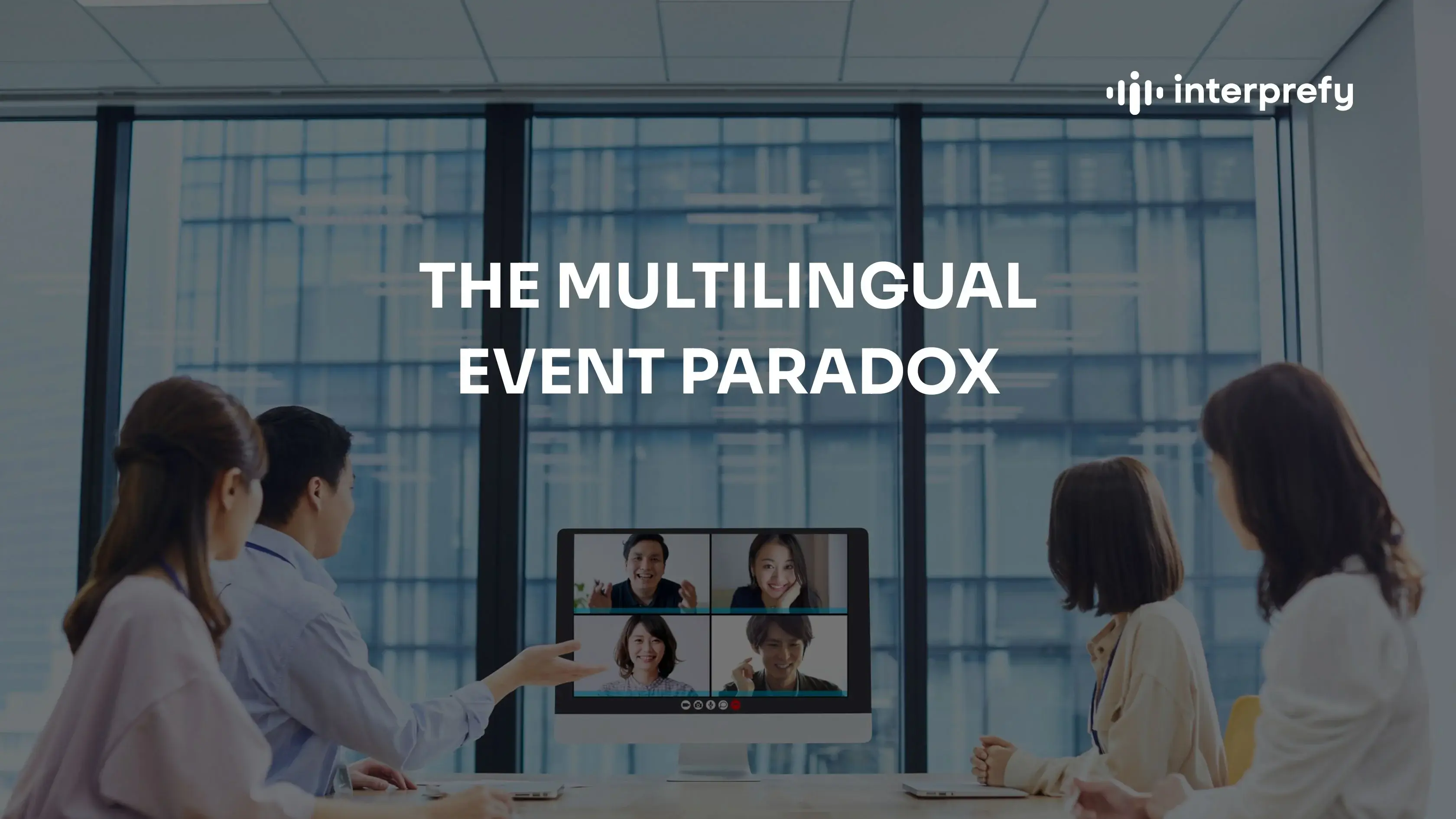
Imagine you are organising a cutting-edge hybrid summit. Your speakers are industry leaders, your platform is seamless, and your marketing campaign has reached audiences across continents. On the day of the event, hundreds of attendees attend online and onsite — from Zurich to São Paulo to Tokyo. Yet, as the sessions unfold, something feels off.
A noticeable portion of the audience drops off early. Engagement is minimal. Post-event feedback highlights "confusion" and "language issues." Others simply leave no comment at all.
We call this the Multilingual Event Paradox: the demand for multilingual communication in global business events has never been higher, yet awareness of accessible, scalable solutions remains surprisingly low. The result? A significant missed opportunity for engagement, inclusivity, and business growth.
Topics: Multilingual Communication & Inclusion
11 min read
Why 1 in 3 Event Organisers Are Still Missing the Multilingual Moment
As multilingual participation becomes a standard, organisations across Asia-Pacific and the Middle East are increasingly planning meetings and events for diverse, global audiences. Whether coordinating regional webinars, internal town halls, or large-scale conferences, teams are being asked to engage participants across languages and borders. Yet even as formats evolve, one element is often overlooked: language access. When it's missing, the result isn't just a gap in understanding — it can directly affect participation, engagement, and business outcomes.
At Interprefy, we work alongside leading event organisers across the Middle East and APAC, and we see this pattern emerge time and again. Ambitious formats. Brilliant speakers. Expansive reach. But no or little multilingual support. According to our latest research, one in three event organisers in these regions still don’t provide any form of real-time speech translation or interpretation.
Topics: Multilingual Communication & Inclusion Interpreters & Professional Services
8 min read
Why Multilingual Communication Is Key to Remote and Hybrid Teams
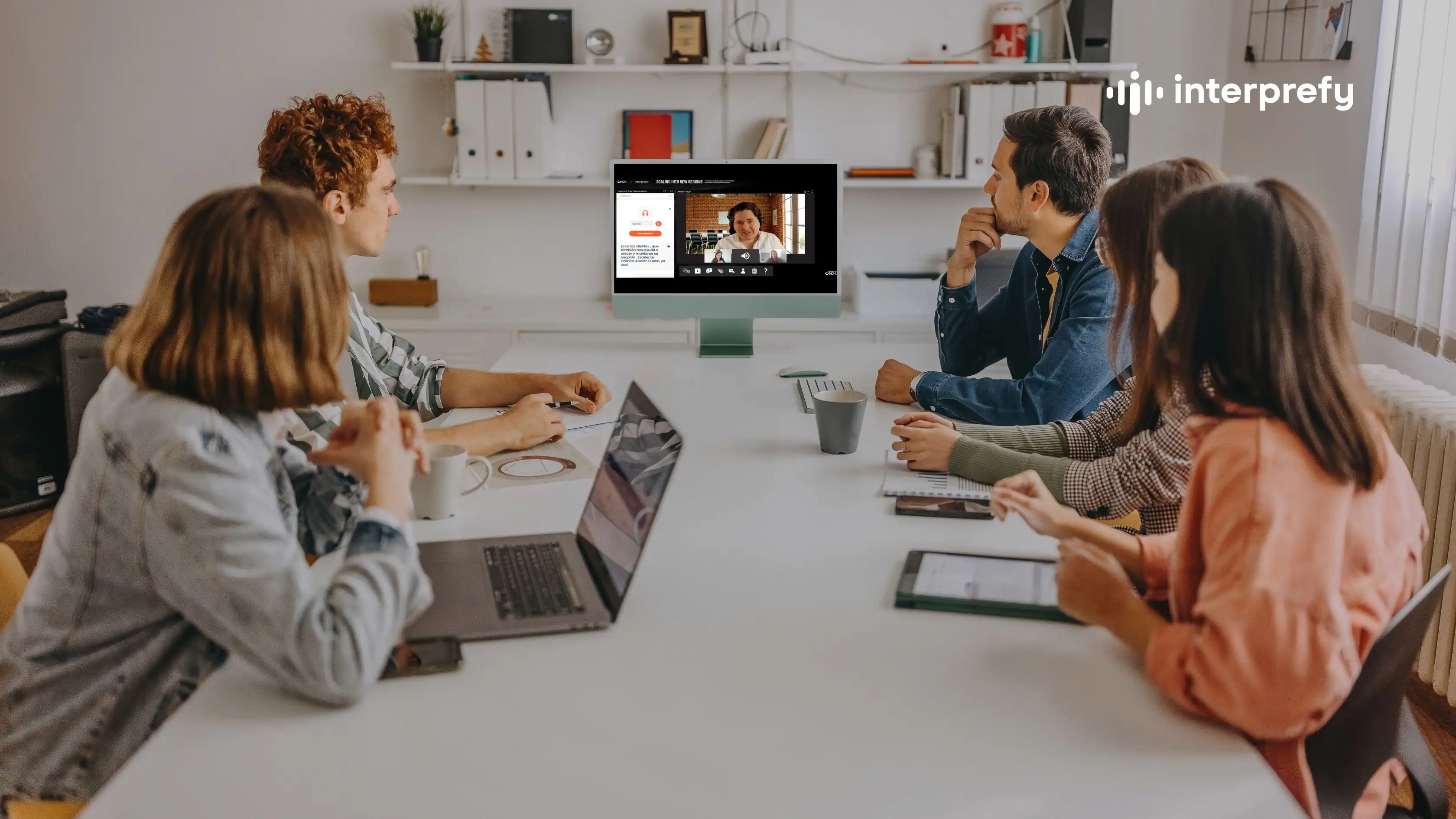
There’s no denying it — work has changed, permanently. These days, it’s common for a single project team to span three or four time zones. One team member might log in from London, another from Warsaw, and another from Cape Town or Singapore. The era of fixed offices and face-to-face collaboration is fading fast. In its place, we now have something more flexible, more borderless — and far more complex.
Topics: Multilingual Communication & Inclusion Event Planning and Hybrid Events
7 min read
U.S. English-Only Policy: What Global Businesses Need to Know
.webp)
The U.S. Attorney General memorandum from July 14, 2025, has marked a turning point in the country’s approach to multilingual government communication. The document, which implements Executive Order 14,224, designating English as the official language of the United States, introduces guidance for federal agencies to scale back translation and interpretation services.
While this policy is U.S.-centric and primarily affects public sector operations, its ripple effects are global, particularly for international businesses, legal teams, event organisers, and customer service leaders who operate in or with the U.S.
Topics: Multilingual Communication & Inclusion
6 min read
Cost-Effective Multilingual Events with Interprefy Plans

Multilingual meetings and events have become a standard part of global business. Expectations for accessibility and inclusion continue to rise, and so do the challenges for event organisers and planners, project managers, event coordinators and anyone involved in the preparation of a global event; especially when it comes to managing multilingual services across formats, time zones, and budget constraints. Therefore, whether you're hosting internal training sessions, live webinars, or multi-language conferences, finding a cost-effective way to manage interpretation across multiple events can be a real hurdle.
That’s where Interprefy Plans come in. Instead of locking organisations into a rigid, standardised approach, they offer a flexible way to plan and budget for options that match your needs, not just your next event.
Topics: Event Planning and Hybrid Events
14 min read
European Accessibility Act: What Your Company Needs to Know

Your company is planning a hybrid event, an all-hands meeting, or a public webcast — but have you considered how accessible your communication really is?
The European Accessibility Act (EAA) is now in force. Since 28 June 2025, organisations offering covered products and services in the EU have had to meet new accessibility requirements — turning accessibility from a best-practice goal into a legal obligation. For teams delivering live audio, video, and spoken content, that means ensuring every channel is designed to be accessible from the start.
Topics: Live Captions Multilingual Communication & Inclusion Accessibility & Compliance
15 min read
Live Translation Options for Google Meet in 2025: New Feature and More
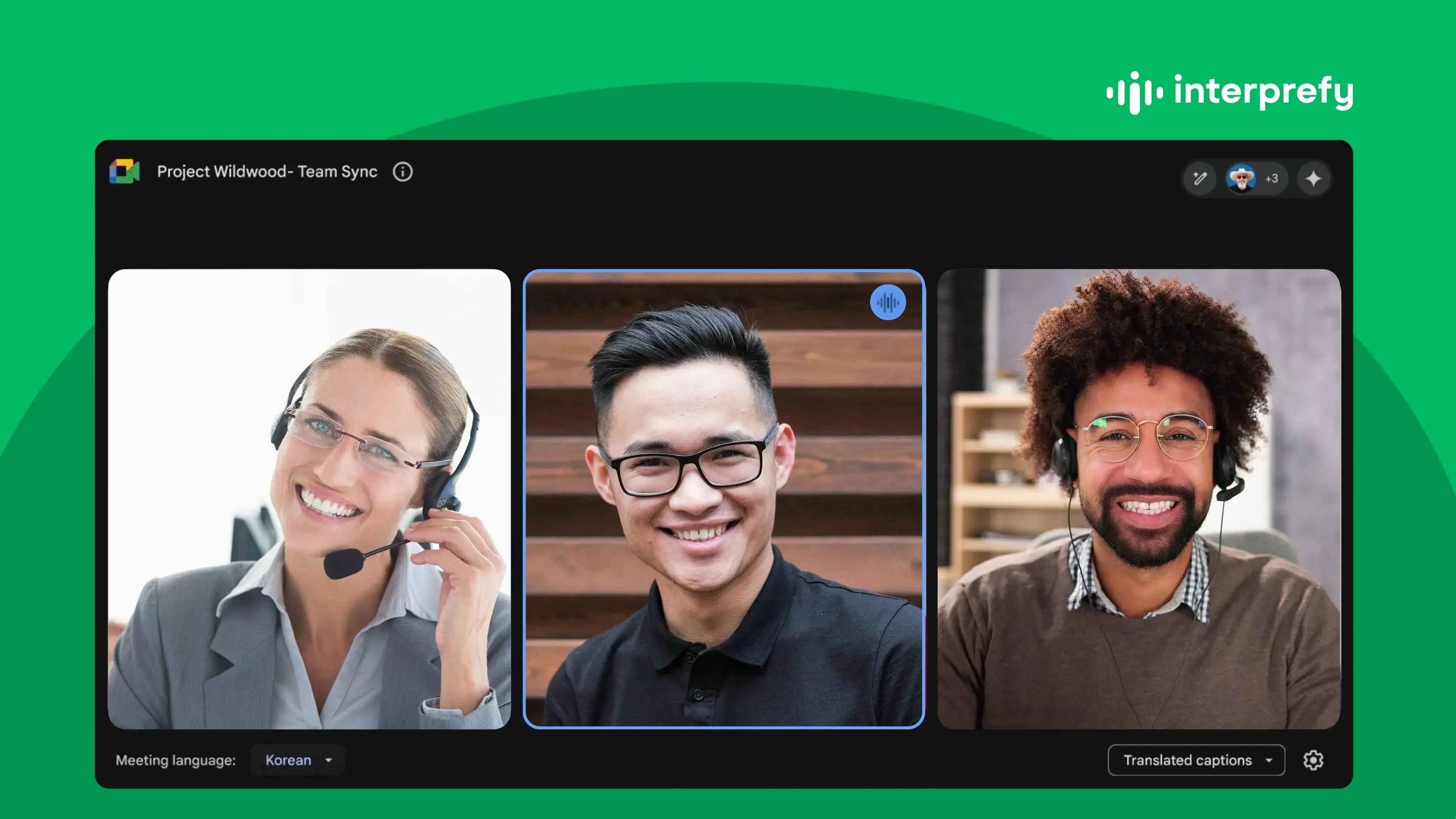
You’re preparing a regional update or an international team meeting in Google Meet, but not everyone speaks the same language. Sound familiar?
Google Meet introduced AI speech translation in May 2025 during its beta rollout at Google I/O 2025, complementing its existing AI-powered captions. This addition represents both a significant step forward and a direct response to the growing demand for real-time translation in everyday video calls.
But this new feature is still in the initial phase and only covers a pair of languages (English <> Spanish). Therefore, if you’re planning a high-stakes meeting, a multilingual town hall, or a global product launch, this built-in tool alone might not cut it. That’s where professional interpretation services and external language solutions like Interprefy come in — giving you the flexibility, support, and quality you need to connect across languages.
Topics: Live Captions AI & Live Machine Translation Multilingual Communication & Inclusion Microsoft Teams & Platform Integrations
27 min read
Live Translation Options for MS Teams: Interpretation and AI Captions
Last updated: November 2025
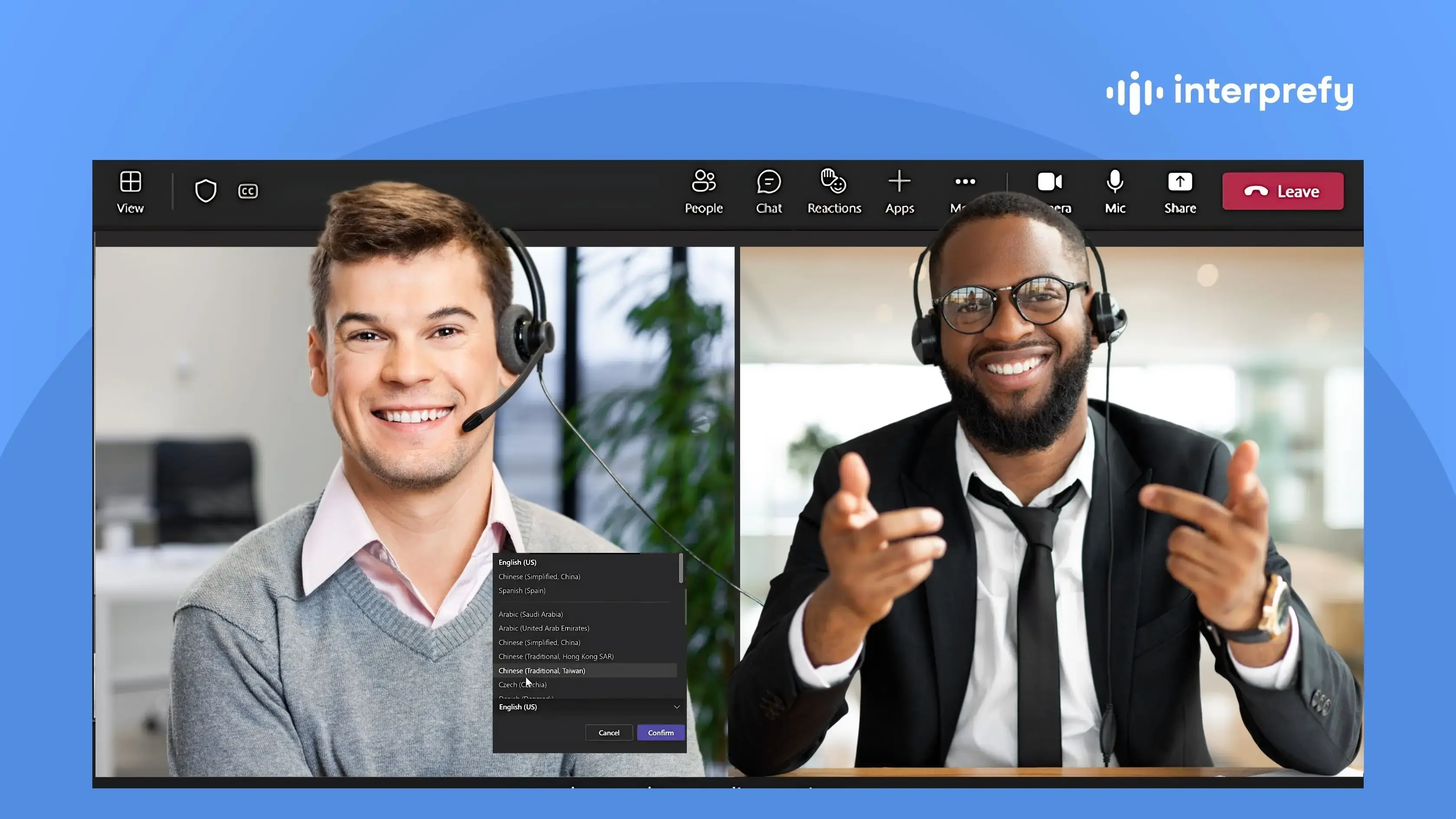
What happens when not everyone speaks the same language in your Microsoft Teams meeting? That’s where interpretation and live translation solutions like remote simultaneous interpretation, AI-powered speech translation, live AI captions and subtitles come in.
Microsoft Teams has come a long way in supporting multilingual meetings. But for many meeting organisers, those built-in features still don’t go far enough. And when clarity, speed, and accessibility matter most, that’s where Interprefy steps in. We offer advanced language solutions that expand Teams’ native capabilities and extend effortlessly across other platforms, giving you seamless multilingual support wherever you meet.

 Download from the App Store
 Download from Google Play
 More download links