For enterprises, organisations and institutions, the real challenge of multilingual communication is not providing translation, but delivering language access in a way that is dependable, scalable and aligned with enterprise‑level expectations.
For enterprises, organisations and institutions, the real challenge of multilingual communication is not providing translation, but delivering language access in a way that is dependable, scalable and aligned with enterprise‑level expectations.
For more than three decades, the Americans with Disabilities Act has shaped how public life in the United States becomes more accessible. Introduced in 1990, the ADA protects the rights of people with disabilities across employment, transport, public services, and participation in civic life. Title II sits at the heart of this framework. It applies to State and local government entities and requires that qualified individuals with disabilities can access services, programmes, and activities on an equal basis.
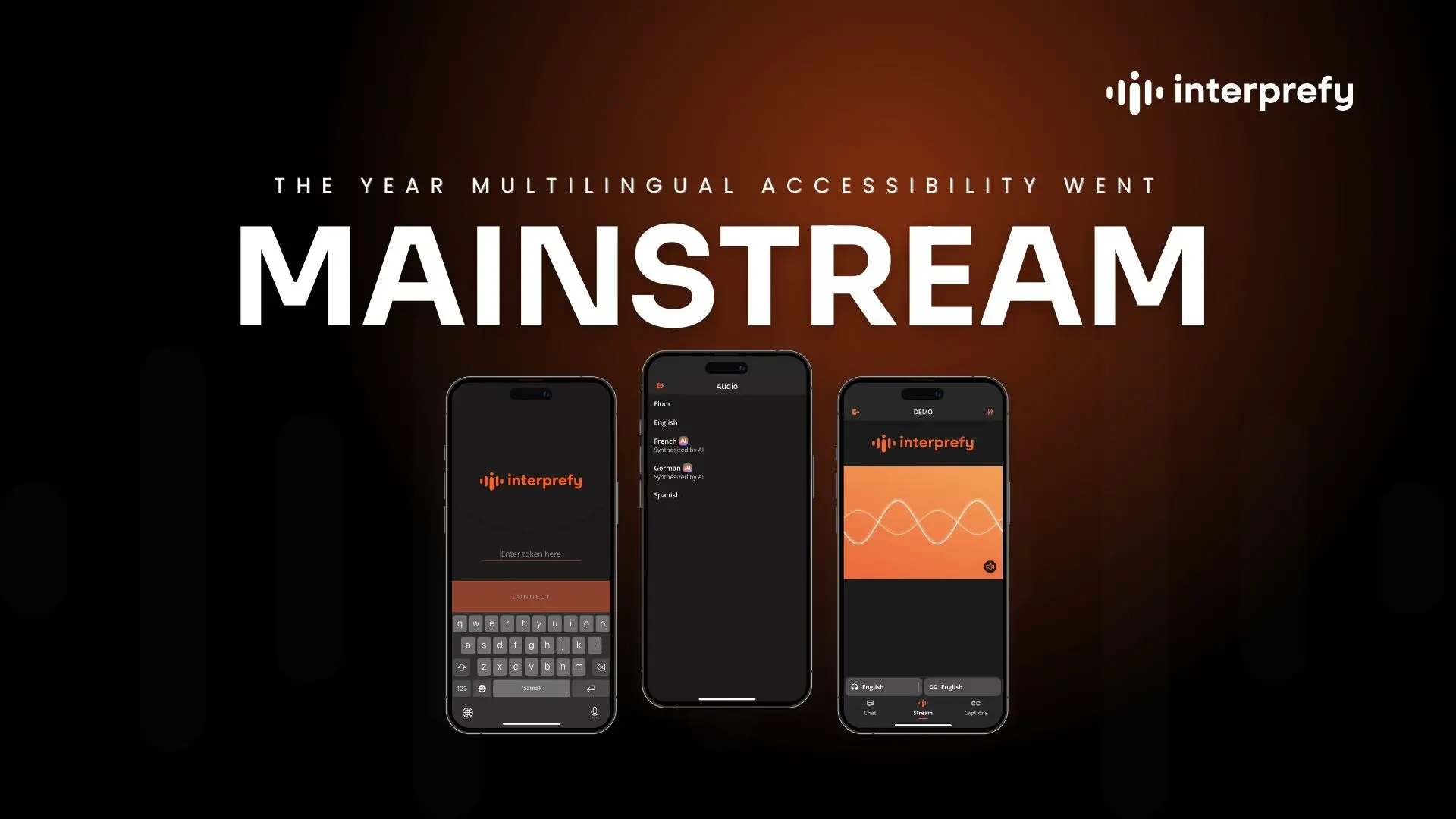
There was a time — not that long ago — when offering interpretation at events felt like a gesture of generosity. Something above and beyond. Now? In 2025, it's fast becoming the baseline.
Part of that shift has to do with legislation. But it’s also about what audiences expect. They’re joining from dozens of countries, tuning in on different devices, and increasingly, they’re asking: Can I actually follow this in my own language?

Your company is planning a hybrid event, an all-hands meeting, or a public webcast — but have you considered how accessible your communication really is?
The European Accessibility Act (EAA) is now in force. Since 28 June 2025, organisations offering covered products and services in the EU have had to meet new accessibility requirements — turning accessibility from a best-practice goal into a legal obligation. For teams delivering live audio, video, and spoken content, that means ensuring every channel is designed to be accessible from the start.
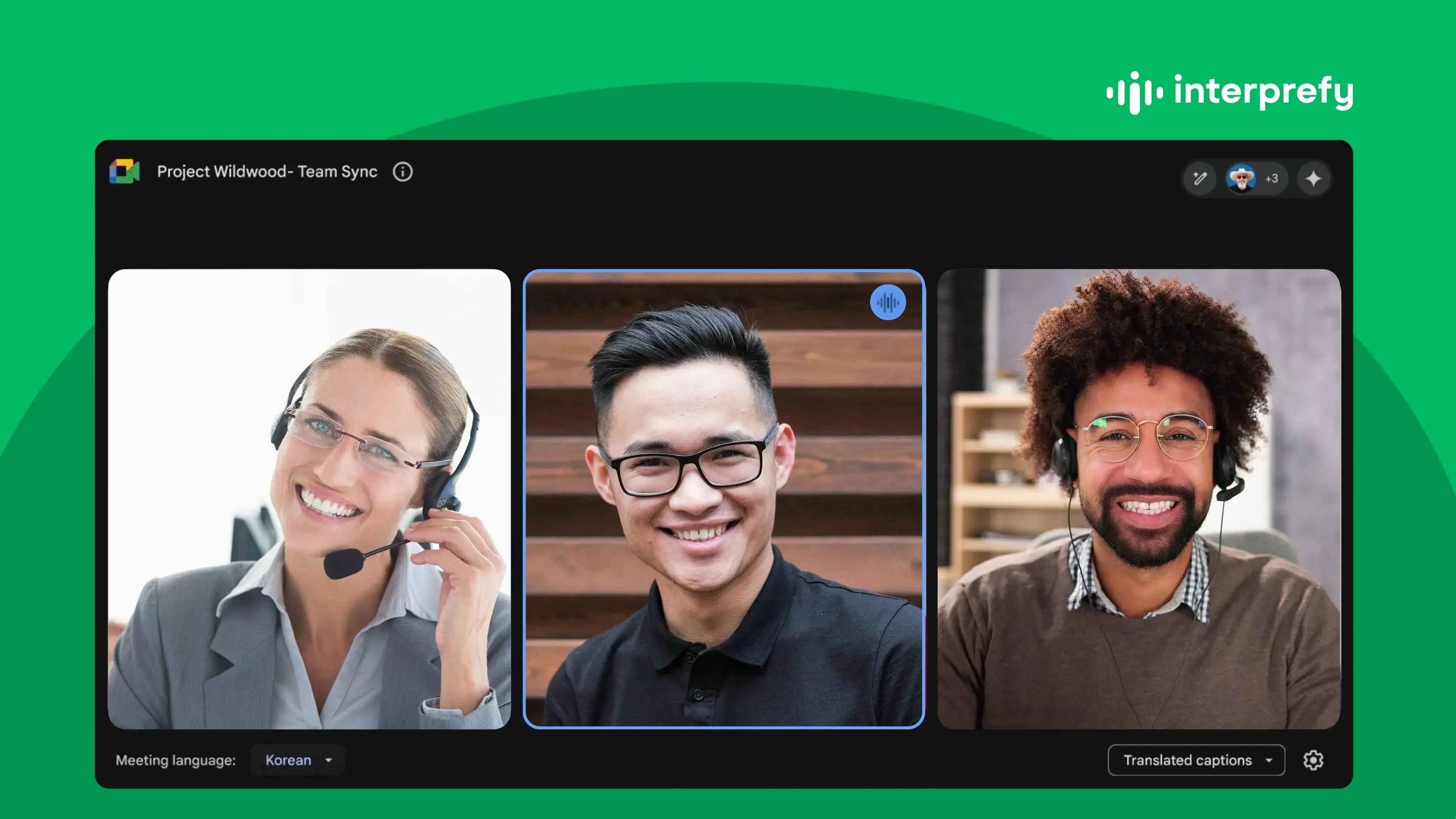
You’re preparing a regional update or an international team meeting in Google Meet, but not everyone speaks the same language. Sound familiar?
Google Meet introduced AI speech translation in May 2025 during its beta rollout at Google I/O 2025, complementing its existing AI-powered captions. This addition represents both a significant step forward and a direct response to the growing demand for real-time translation in everyday video calls.
But this new feature is still in the initial phase and only covers a pair of languages (English <> Spanish). Therefore, if you’re planning a high-stakes meeting, a multilingual town hall, or a global product launch, this built-in tool alone might not cut it. That’s where professional interpretation services and external language solutions like Interprefy come in — giving you the flexibility, support, and quality you need to connect across languages.
Last updated: November 2025
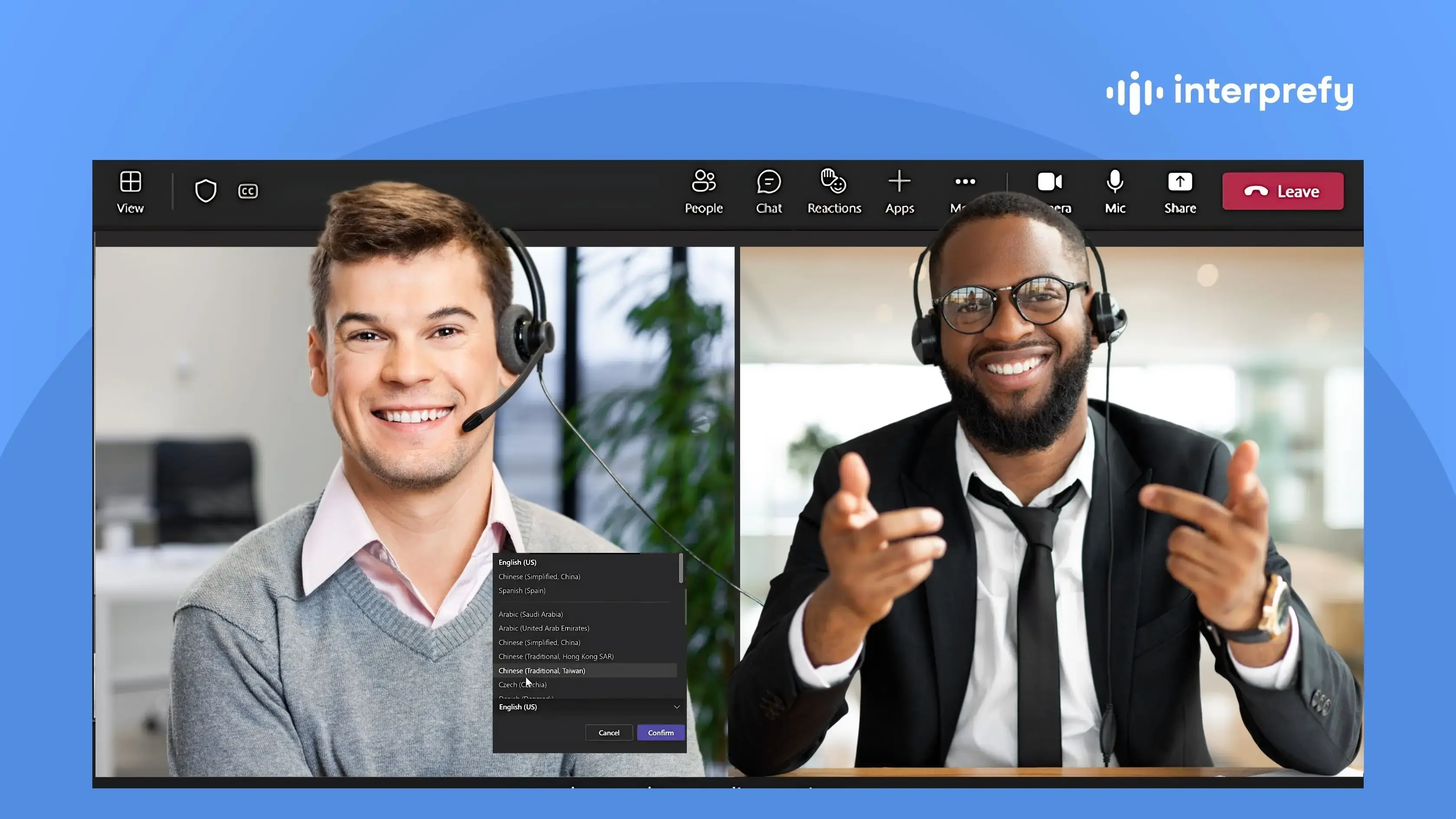
What happens when not everyone speaks the same language in your Microsoft Teams meeting? That’s where interpretation and live translation solutions like remote simultaneous interpretation, AI-powered speech translation, live AI captions and subtitles come in.
Microsoft Teams has come a long way in supporting multilingual meetings. But for many meeting organisers, those built-in features still don’t go far enough. And when clarity, speed, and accessibility matter most, that’s where Interprefy steps in. We offer advanced language solutions that expand Teams’ native capabilities and extend effortlessly across other platforms, giving you seamless multilingual support wherever you meet.
.webp)
There’s a lot of talk about AI in interpretation right now. Some of it is exciting. Some of it creates confusion.
Speech technology has come a long way. We’re seeing real-time captions, multilingual voiceovers, and live translation become more common. But somewhere along the way, people started to assume that AI can handle everything — even interpretation.

Planning an event that runs smoothly is already a big job. Throw in multiple languages, hybrid attendance, and tight timelines, and it gets a lot trickier.
We get it. You want everyone at your event — whether they’re in the room or joining online — to feel included and able to follow along. But traditional interpretation setups aren’t designed for today’s formats. Many times they’re costly, complicated, and don’t always fit with your tools or timeline.
.jpg)
Imagine turning on your television and being greeted by a wall of sound, unintelligible and inaccessible. For millions of people with hearing impairments, this is a daily reality. But what if broadcasting could be different? What if every story, every news bulletin, every captivating drama was available to everyone, regardless of their hearing ability? This isn't just a utopian dream; it's the driving force behind the European Accessibility Act (EAA), a landmark piece of legislation that has reshaped broadcasting since coming into force in 2025. This Act isn't just about ticking boxes; it's about fostering inclusivity, expanding audiences, and ultimately, making broadcasting truly accessible.

 Download from the App Store
 Download from Google Play
 More download links